
One of the sights we wanted to see during our time in Fez was the rare Barbary Macaques (monkeys) of the Middle Atlas Mountains. Our riad host Mounir arranged for a driver and, as he had the day off, joined us as our tour guide. As we wound our way up into the mountains, the sunshine of Fez gave way to scattered clouds and the temperature began to drop. We stopped at several viewpoints along the route, and I regretted not bringing a warmer coat. Fortunately, it was sunny by the time we reached our first destination, the town of Ifrane (44 miles, 70 kilometers from Fez.)
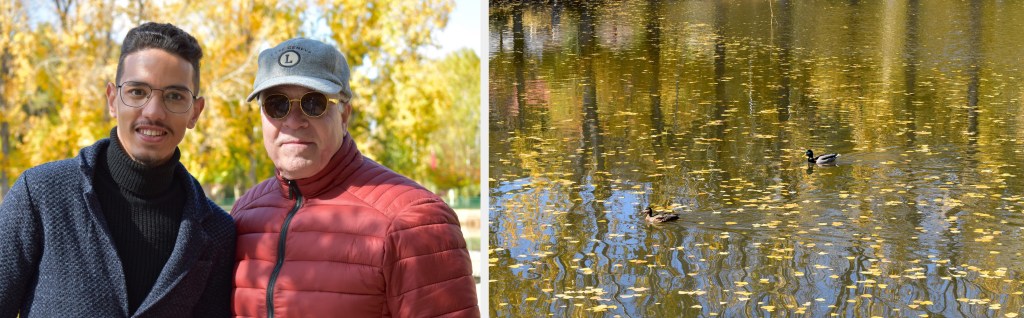
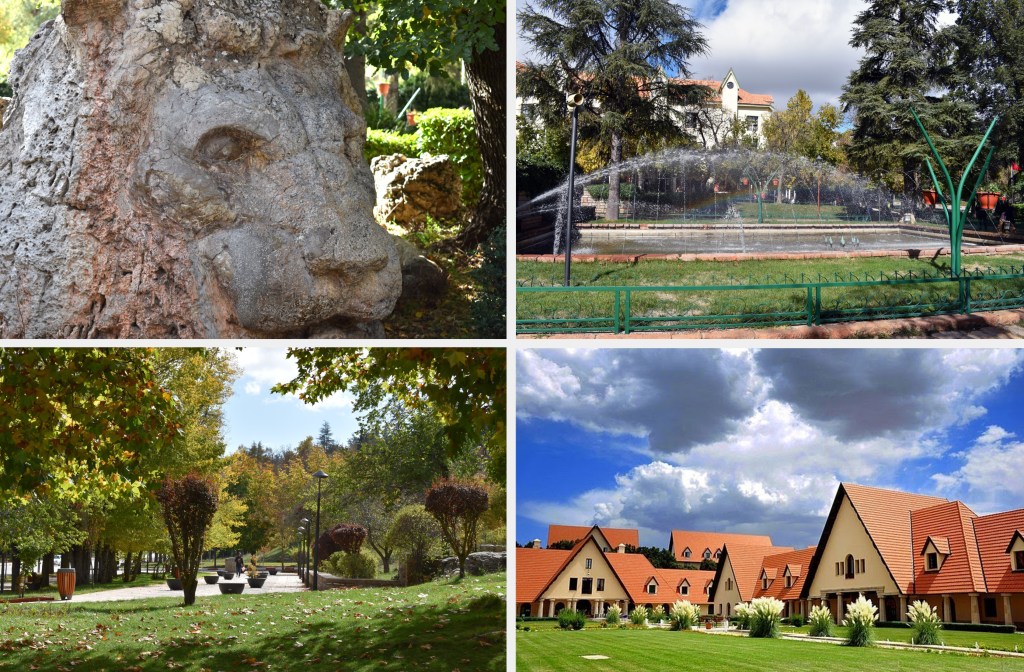
Located at an elevation of 5,620 feet (1,713 meters) above sea level, Ifrane is known for its alpine inspired architecture and nearby ski slopes and forests. Its chalet-style buildings resemble those you’d find in the French or Swiss Alps instead of in Africa. Founded in 1929, it has become a popular holiday spot for both winter and summer sports including skiing, hiking, fishing, and horseback riding. The first stop of our walking tour around the town was Ifrane Lake inside the lovely Parc La Prairie. The poplar trees surrounding the lake were at their peak of fall color and seeing all the shades of gold and yellow reflected in the water was mesmerizing.
We continued our walk stopping along the way to see the famous stone Lion statue. Carved by a German soldier during WWII, it commemorates the last wild Atlas lion. After lunch we headed into the 131,000-acre (53,000 ha) Ifrane National Park, home to the largest Atlas cedar forest in the world. When you picture Africa in your mind, you envision vast deserts, sweeping plains, and jungles, not forests filled with cedar, oak, and pine trees. This diverse landscape is both surprising and refreshing. Our next destination, Cèdre Gouraud Forest is 14.5 miles (23.3 kilometers) from Ifrane and is home to Barbary Macaques.
The best spot for viewing the Barbary Macaques is at the picnic area inside the forest. Here you’ll find vendors in wooden stalls selling fossils, minerals, honey, and hand-made crafts. You can also buy bags of peanuts and bananas to feed the monkeys. Barbary Macaques are omnivorous, and they have a varied diet consisting of plants, fruits, seeds, fungi, invertebrates, lizards, and agricultural crops. As we saw, they’ll come right up to humans for a tasty snack. Once widespread in parts of Europe and North Africa, from Egypt to Morocco, Barbary Macaques are now only found in fragmented areas of the Rif and the Middle and High Atlas Mountains in Morocco and parts of the Tellian Atlas in Algeria. A small population also lives on the Upper Rock of Gibraltar.
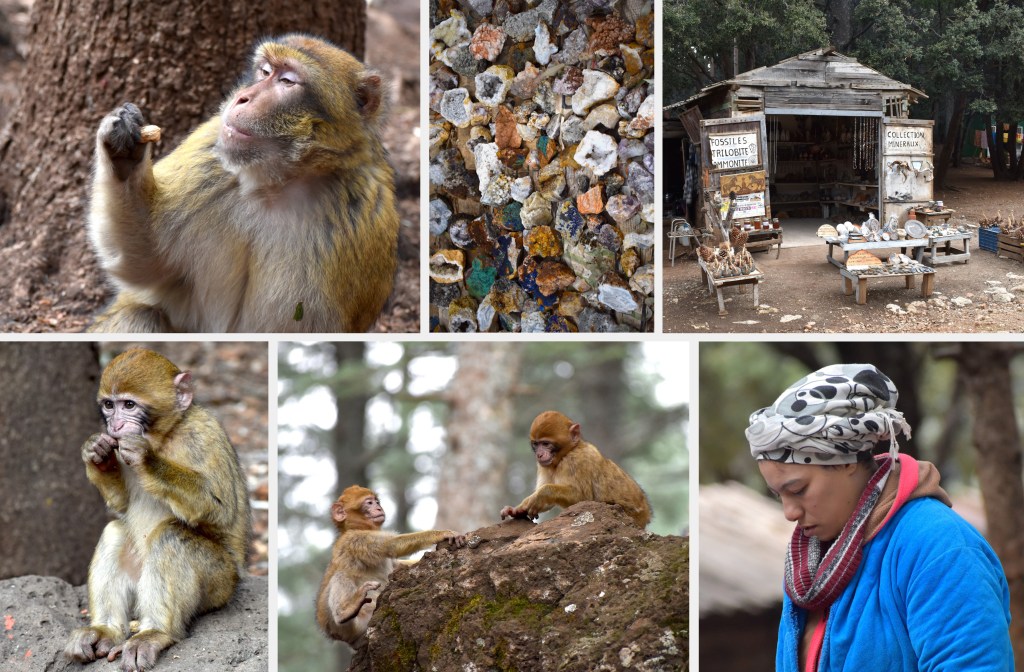
We saw monkeys of all ages scampering about the forest floor, over huge rocks, and up into the tall trees with amazing dexterity. Their thick coats are well suited to the extreme conditions of the Atlas Mountains, and during the hot summer months, they molt their fur. They mate in the autumn and winter, giving birth in the spring and early summer. Their gestation period is about 6 months, and they generally have one infant per litter. I could have spent hours watching the Barbary Macaques, especially the juveniles as they chased each other and played with abandon. A definite highlight of our amazing trip to fabulous Fez!

Where would you like to go next? Back to Lisbon for a stroll around Belem? Or to Sintra to see two spectacular palaces? Or perhaps to France for a barge cruise along the Canal du Midi? Leave a comment with your pick!


 Travels with Terri
Leave a comment