
With its proximity to Lisbon, favorable climate, and lush natural beauty it’s no wonder why Sintra attracted both royals and the rich as THE spot to build their palaces. It is also one of the most romantic spots in Portugal, where kings and queens have fallen in love and where writers such as Lord Byron came for inspiration. Sintra (Moon Mountain) is located at the end of the massif formed by the Aire, Candeeiros, and Montejunto mountains. At 1,732 feet (528 meters) Pena is the highest point in the county. The area is surrounded by forests consisting of eucalyptus trees, and stone and maritime pine trees. Humans have occupied the region since the late Stone Age (between 8,000 and 3,000 BC) and artifacts have been found from the Palaeolithic and Neolithic Ages to the Bronze and Iron Ages. Both the Romans and the Moors once occupied the area, and Moorish influences can be seen in today in many of the buildings. In January of 1154, King D. Afonso Henriques granted a charter to Sintra and began repairs to the castle and the construction of a new church. Much of what stands today was constructed during Portugal’s golden age in the late 18th and throughout the 19th century. For our trip to Sintra in May of 2021, we decided to concentrate on two palaces: Pena and Monserrate.
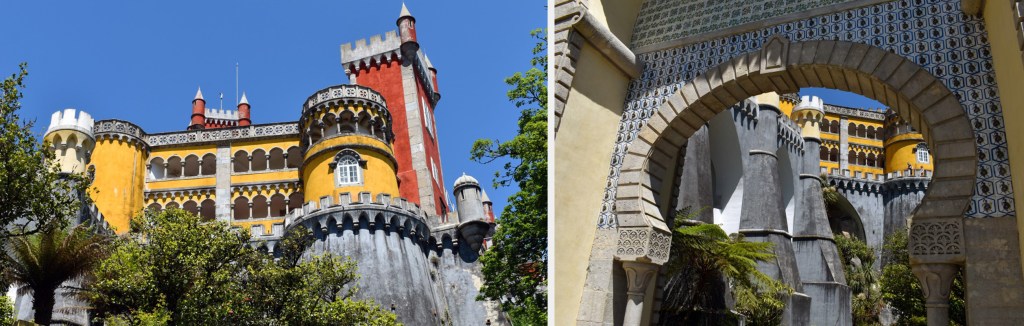
Perched atop a steep hill, Pena Palace is easy to spot from both Sintra and nearby towns. Its red and yellow painted walls stand out from the green landscape and its massive towers dominate the skyline. As one of the top sights in Sintra, it’s usually very busy even on weekdays. However, due to Covid travel restrictions, it wasn’t crowded at all on the day of our visit. My friend and I didn’t have to wait in line for tickets, giving us more time to explore the palace and grounds. As we walked towards the entrance, I marveled at the detailed patterns carved into the stonework and the intricately painted tiles surrounding the gate.
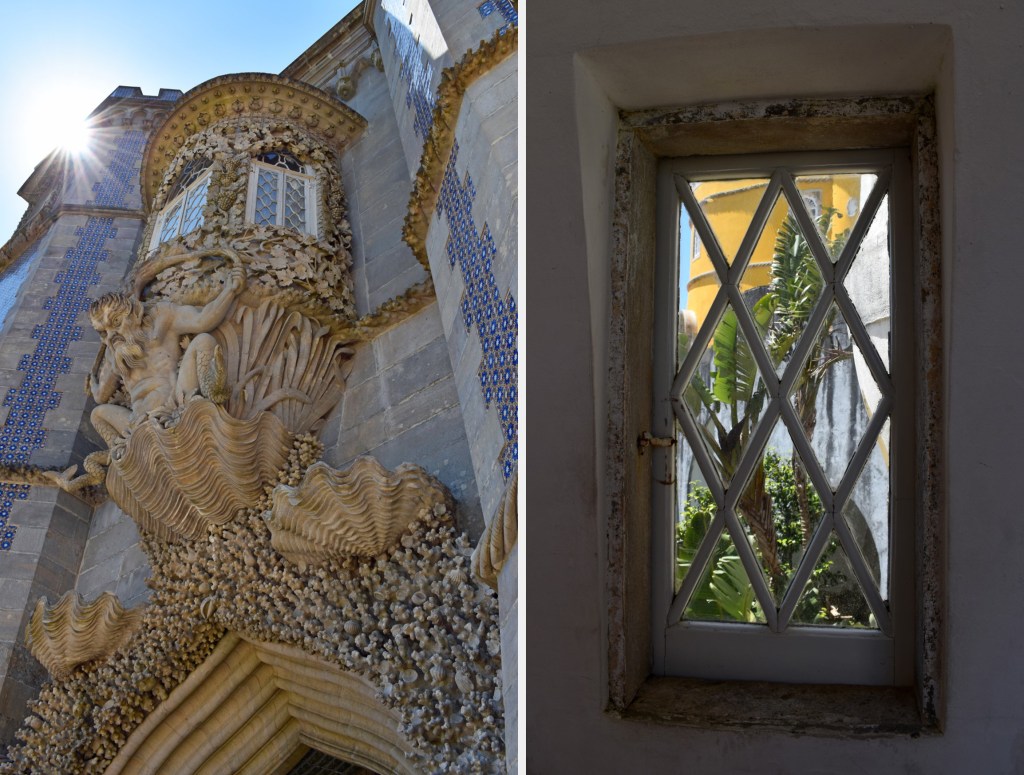
The history of Pena Palace begins in the 12th century, when a chapel dedicated to Nossa Senhora da Pena was erected. A monastery was added by D. Manuel I during his reign as King of Portugal from 1495 to 1521. Both were abandoned after the earthquake of 1755 caused severe damage. In the late 1830’s, King-Consort D. Fernando II (husband of Queen Maria II) hired the Baron of Eschwege to help him design a new summer residence. A landmark work of the 19th century, Pena Palace was built around the existing chapel and monastery. Its eclectic use of Egyptian, Moorish, Gothic and Renaissance elements exemplify the Romanticism style of architecture. As we walked around the exterior, taking in its decorative battlements and mythological statues, I felt like I’d been transported to a different place and time. I could easily envision a regimen of Moors on horseback charging across the drawbridge with swords raised towards the sky.
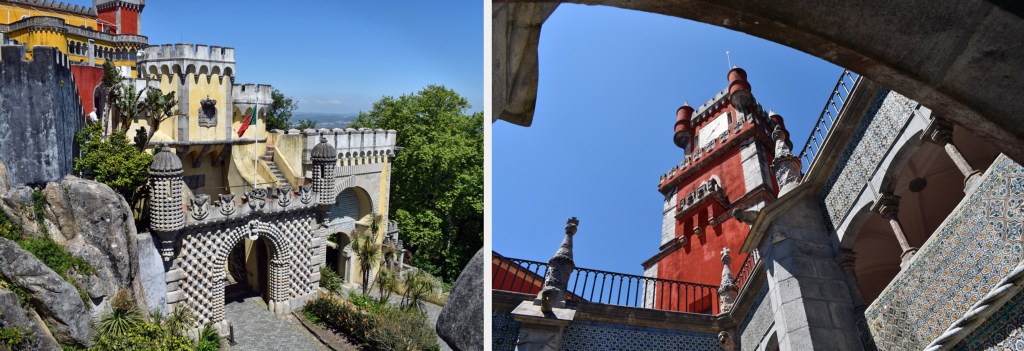
Before entering the palace interior, we walked around the courtyard of the original Monastery. The two-story Manueline cloister is decorated with intricately painted azulejo tiles and offers a stunning view of the Red Tower. If you’ve visited the Belem Tower in Lisbon, you’re sure to notice the striking similarity between the two. As it wasn’t crowded when we visited, my friend and I were able to take our time in each room. The palace is huge, and we spent several hours taking in its architectural details, ornate furnishings, and impressive art collection. Here’s a brief description of some of the rooms we toured.
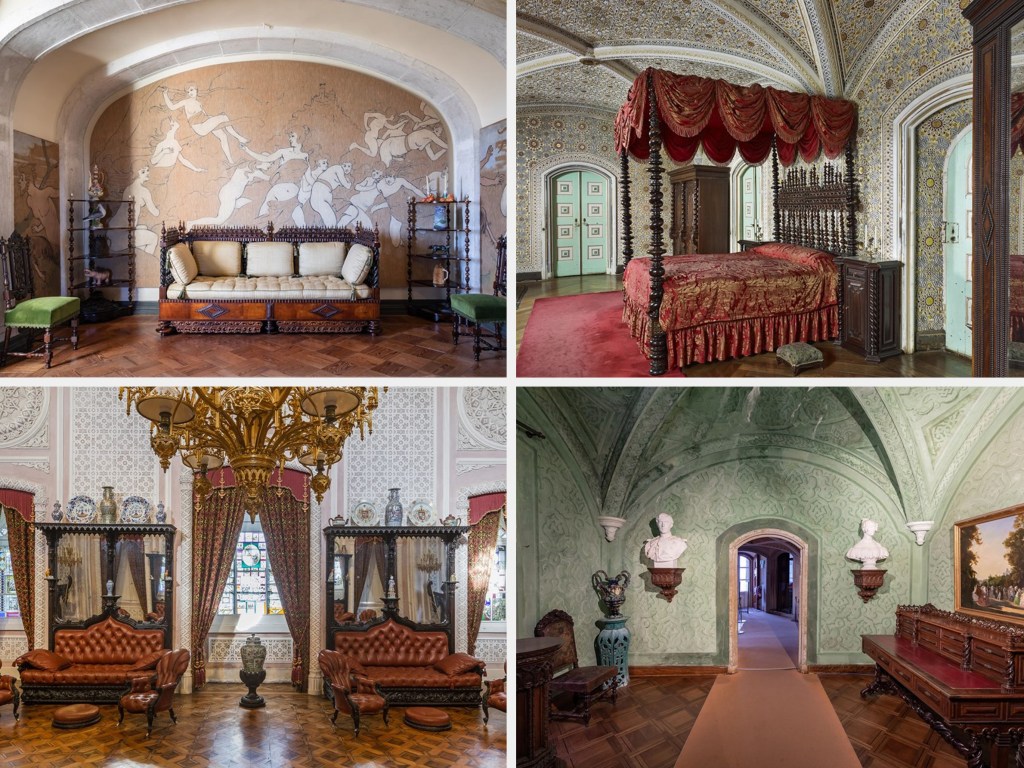
The chambers of King Carlos I (1889 to 1908) are on the lower floor of the Manueline cloister in the space formally occupied by the palace servants. His office adjoins his bedroom and private bath and features his paintings of nymphs and fawns.
The bedroom of Ferdinand II is in the old convent overlooking the Moorish Castle. His wife Queen Maria II (b. 1819, d. 1853) passed away before their chambers in the new palace tower were completed. The room is decorated in painted plaster with a Neo-Mudéjar style dating to 1882.
The Great Hall is the largest room in the palace and was used for leisure and entertainment. The shelves above the sofas display King Ferdinand’s collection of Japanese and Chinese porcelain, and his collection of European stained glass adorn the windows. The 72-candle chandelier and the torch-holder candelabras are all gold-plated brass reflecting Gothic elements.
The Green Room, an antechamber to the Sitting Room, was the first room to receive a mural decoration. The four busts on display depict Pedro V; Louise of Orléans (Queen of the Belgians); Charles Albert (King of Sardinia); and an Allegory of Winter.
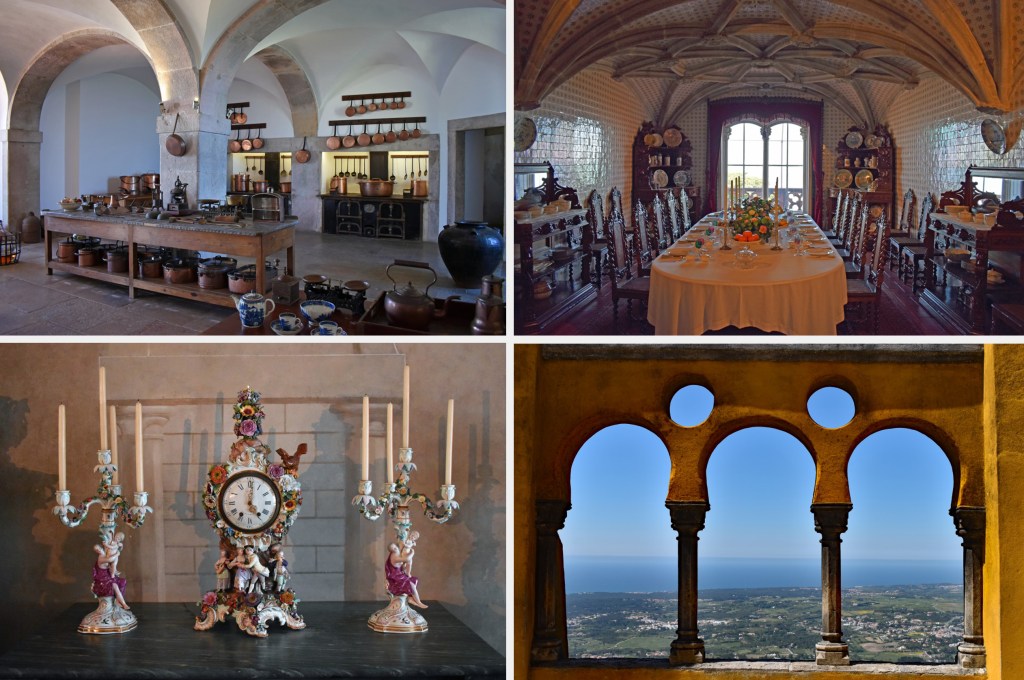
Because I love to eat, the palace kitchen was one of my favorite rooms. Two of the three original stoves remain, and copperware of various shapes and sizes are displayed throughout the massive space. In one display case are white and blue porcelain dishes once used by the royal family. Another case displays pâté molds that feature the monogram of King Ferdinand II. Their shapes vary from suckling pigs to birds depending on what type of pâté was being made.
King Ferdinand II turned the refectory of the convent into a private dining room for the royal family. Its ribbed vaulted ceiling is typical of the 16th century Manueline style. The porcelain table settings and crystal glassware date back to the 19th century and bare the mark of the royal crown. The table can expand to seat up to 24 diners and is surrounded by carved wooden chairs. I particularly liked the attention of detail that went into the centerpieces which contain replicas of the fruits and flowers used during the times of the royal family.
Stay tuned for Part Two where I visit Monserrate Palace, discover the signature pastry of Sintra, and offer some travel tips to help plan your visit!


 Travels with Terri
Leave a comment