
The Palace of Monserrate has a long history of famous occupants and guests. In 1790, wealthy diamond merchant Gerard de Visme built the first Neo-Gothic palace on the ruins of the old chapel of Our Lady of Monserrate. In the mid-1790’s, British novelist and art collector William Beckford became the new tenant. During his stay he commissioned restoration work on the palace and improvements to the surrounding gardens including an artificial waterfall. A stone arch near the waterfall is named after a character in his most famous novel Valthek. In 1809, renowned British poet Lord Byron visited Monserrate and expressed his love for the estate in his poem Childe Harold’s Pilgrimage. In 1856, Sir Francis Cook bought the property as a summer residence and began work restoring the palace and constructing the gardens. As a textile merchant, Cook traveled throughout the Middle East and his residence reflects the fusion between Islamic and Romantic elements.
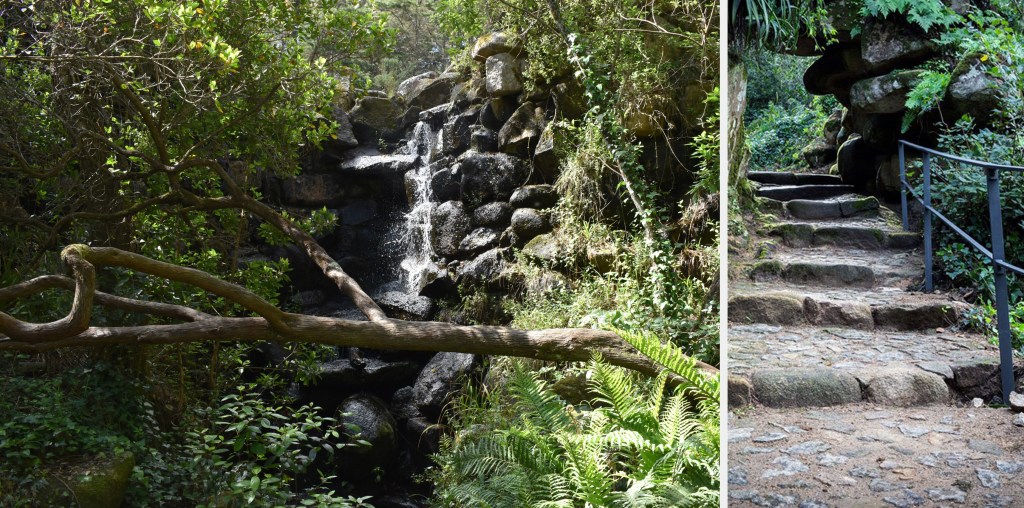
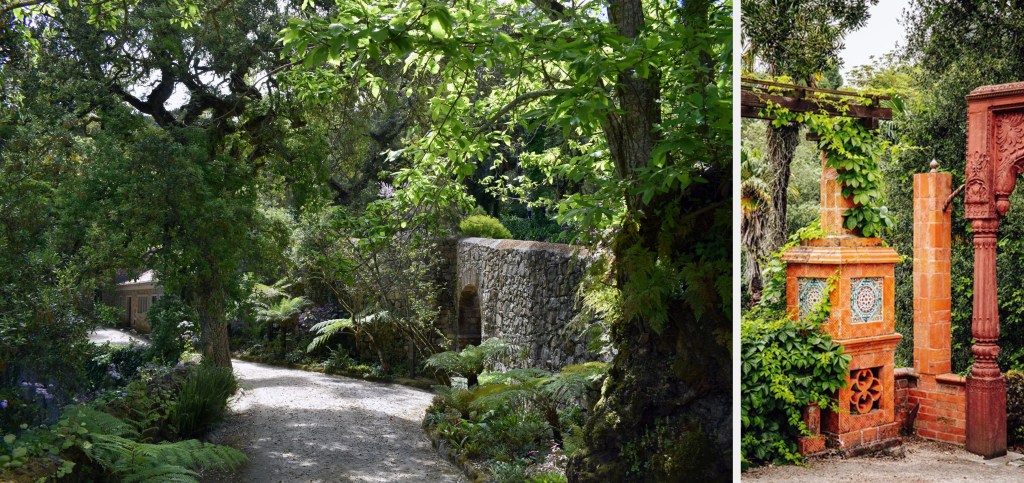
Located 2.5 miles (4 kilometers) from Sintra, Monserrate can be reached by Bus 435 or by car. My friends and I drove, and it only took ten minutes to get there from our holiday house just outside of town. There was ample parking and no line at the ticket booth. From the entrance, we followed a winding path through a stand of Bussaco Cedar trees and past a stone archway. Continuing towards the palace, we stopped to admire an ornate Indian Arch that Cook acquired from Charles Canning, Governor-General of India, following the Indian Rebellion of 1857.
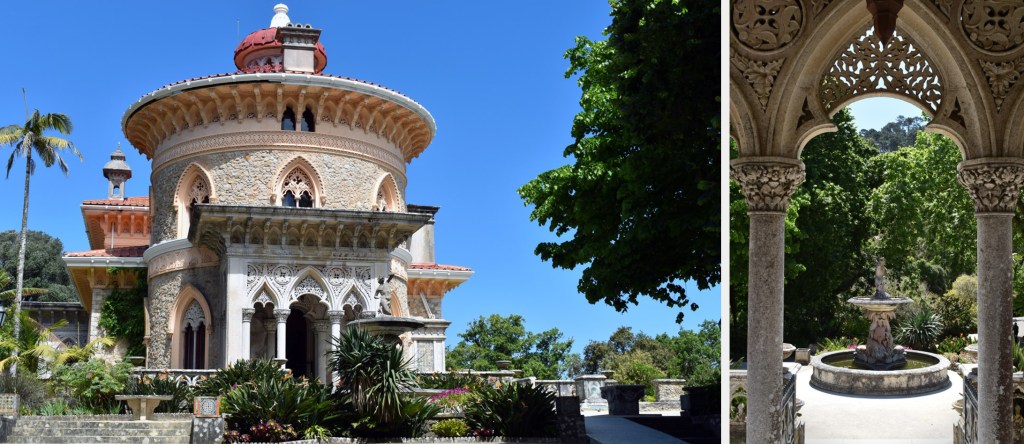
Outside the palace entrance is a Japanese garden containing succulents, palms, and bright orange bird of paradise plants. The Triton fountain stands in perfect symmetry with the arched gates, and koi fish swim amongst the waterlilies in the lower bowl. The intricately carved exterior in muted shades of grey, beige, and peach is simply breathtaking. Renowned English architect James T. Knowles was hired by Cook to rebuild the palace. Knowles added to the original Neo-Gothic construction exotic decorations of mixed Neo-Indian and Neo-Moorish styles.
Our tour of the palace interior began in the Main Atrium which functioned as a gathering space for the Cook family and their guests. The octagon shaped cupola (from the original palace) lets in natural light and is open to the floor above where the bedrooms were located. Its eight carved panels are covered in dyed fabric giving the illusion of stained-glass windows. With its fine latticework ceiling and gilded floral motifs, the Music Room was where the Cook family entertained their guests with musical performances. The room was designed specifically for its acoustics and the sound carries throughout the palace. As the interior of Monserrate was undergoing restoration during our visit, most of the furniture had been removed. This allowed us to move around the rooms freely and take in the detailed patterns of the walls, floors, and ceilings.
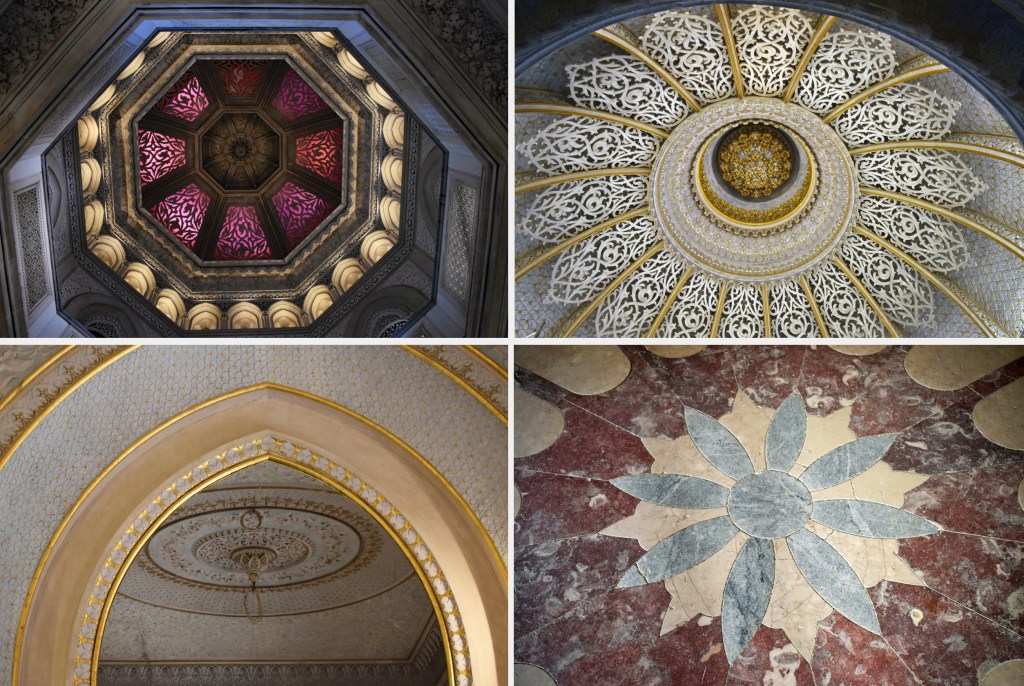
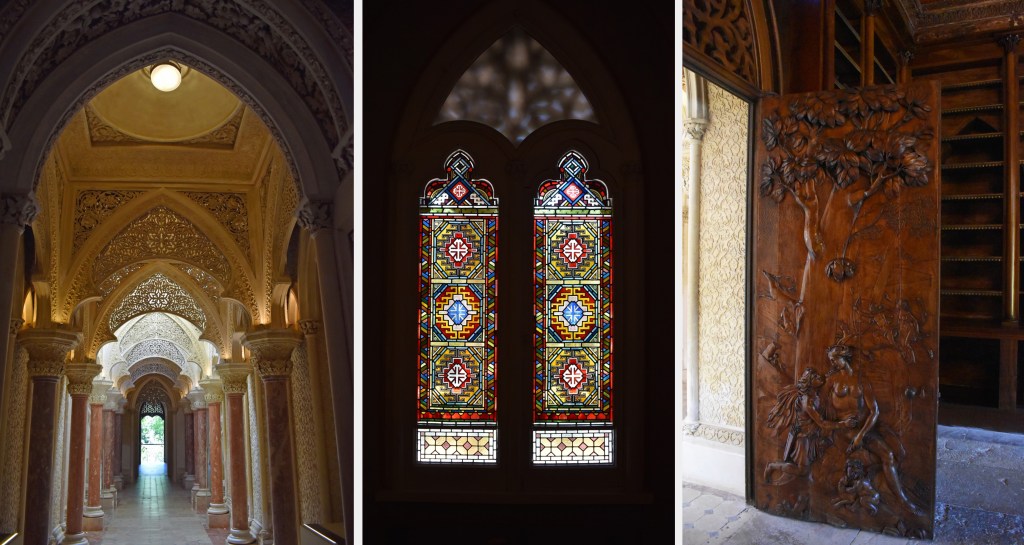
The arched Gallery interconnects the rooms and towers of Monserrate and features plaster relief walls of intricate Moorish patterns. There are carved stone columns supporting the latticework arches, which resemble lace curtains. The design of the Gallery was intended to connect the palace interior with its exterior and gardens. The color scheme is the same as the exterior and garden elements such as flowers, leaves, and stems are carved into the columns and arches. I found the way in which the archway framed the garden entrance to be especially striking. The Sacred Art room is where Cook housed his collection of religious art in a museum-like setting. The colorful stained-glass window befitting of a small chapel reflects the religious theme of the space. The palace Library (restored in 2008/9) served as the office of Sir Francis Cook and its sober style and wooden shelves reflect the masculine tastes of the period. On the heavy walnut door is a depiction of Diana, the Goddess of Hunting.
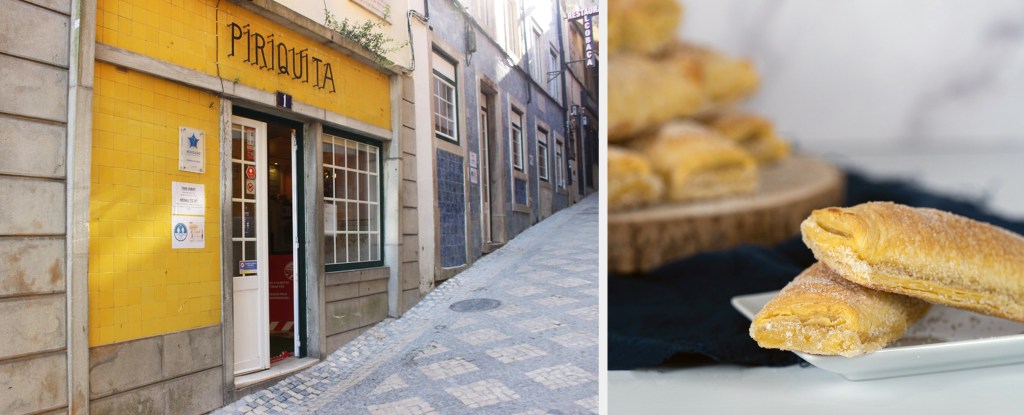
Portuguese love sweet confections and it seems like every city has its own signature pastry. In Lisbon, it’s Pastel de Nata (egg custard tarts.) In Aveiro, it’s Ovos Moles (egg yolks and sugar.) And in Sintra, it’s Travesseiro (pillow pastry.) Many bakeries sell these egg and almond cream puff-pastries but the most famous can be found at Casa Piriquita. Dating back to 1862, Casa Piriquita has been making them since WWII when the recipe was discovered in an old cookbook by Constância Luísa Cunha, the daughter of the founder. The quickly became a hit with both locals and tourists and the recipe is guarded family secret to this day.
If you’re planning a trip to Sintra, here are a few travel tips:
- You can drive to Sintra from central Lisbon in about 30 minutes, but parking is very limited especially during peak season. Instead, take the train from Rossio Station. The journey takes about 40 minutes and from the Sintra Station, you can walk into the heart of Sintra or catch a bus to visit both Pena Palace (Bus 434) and Monserrate Palace (Bus 435.) Click here for more information and prices. There’s also a Hop On Hop Off bus ticket that allows unlimited rides on all Scotturb buses in Sintra including bus 403 to Cabo da Roca and Cascais.
- Passenger cars are not allowed at Pena Palace, so you’ll need to take a bus, taxi, or Tuk Tuk. My friend and I decided to take a Tuk Tuk which included a very informative tour of Sintra and stops at viewpoints up the hill to the palace. The cost for both of us was €15.00.
- Tickets for the palaces can be purchased online at a discount. Click here for more information.

In my next blog, join me for a walk through the stunning gardens of Monserrate Palace!


 Travels with Terri
Leave a comment