
Of the many things I love about Europe, the abundance of castles is near the top of my list. As a child watching animated films, I dreamed of living in a castle one day. The ones from Brave, Cinderella, and The Little Mermaid, are my all-time favorites. In Brave, the young Princess Merida lives in Castle DunBroch in Scotland. Modeled after Eilean Donan and Dunnottar castles, DunBroch is a departure from the luxurious castles of many Disney films. With its stone walls and towers, it looks more like a stronghold than a castle and reminds me of ones from Outlander. Of course, I was excited to learn that our Caledonian Canal barge trip with European Waterways included a private tour of Cawdor Castle.

Located 14 miles (22.5 kilometers) from Inverness Scotland, Cawdor Castle is steeped in both legend and history. According to one legend, William Calder the 6th Thane of Cawdor (or Calder, as the name was originally spelled) received instructions in a dream as to where he should build a tower house. As per his dream, he loaded bags of gold onto the back of a donkey and let it roam freely for the day. When the donkey finally came to rest under a holly tree, William believed that this site would bring prosperity to his family for generations. The petrified tree which died in approximately 1372 (according to scientific testing) is located at the base of the old tower.
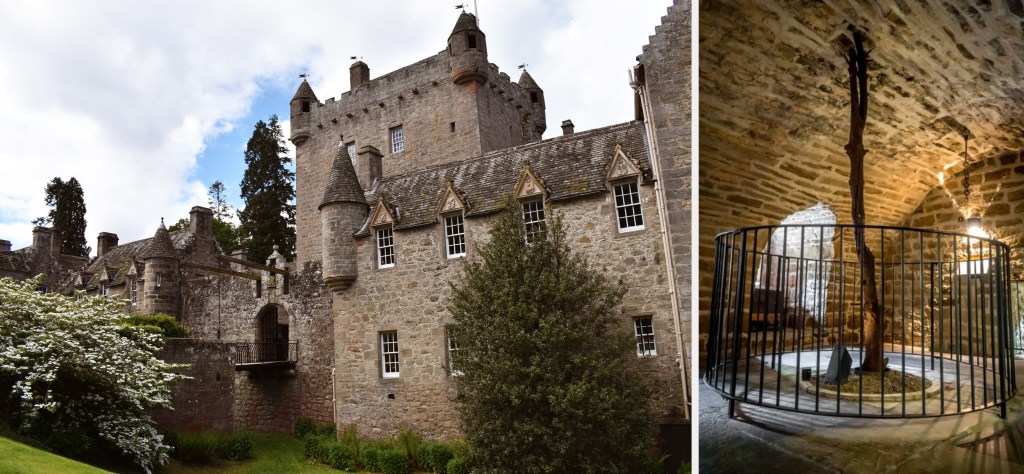
As we approached the castle, our tour guide pointed out the various defense features including a drawbridge, moat, iron gate, and turrets. While the earliest documented date for the castle is 1454, architectural historians have dated the style of stonework in the four-story tower to approximately 1380. Between the 15th and 19th centuries, numerous additions were made to the castle including living spaces and a garden. Our guide told us that the property passed from the Calder family to the Campbells in the 16th century and is currently owned by Countess Angelika Campbell.
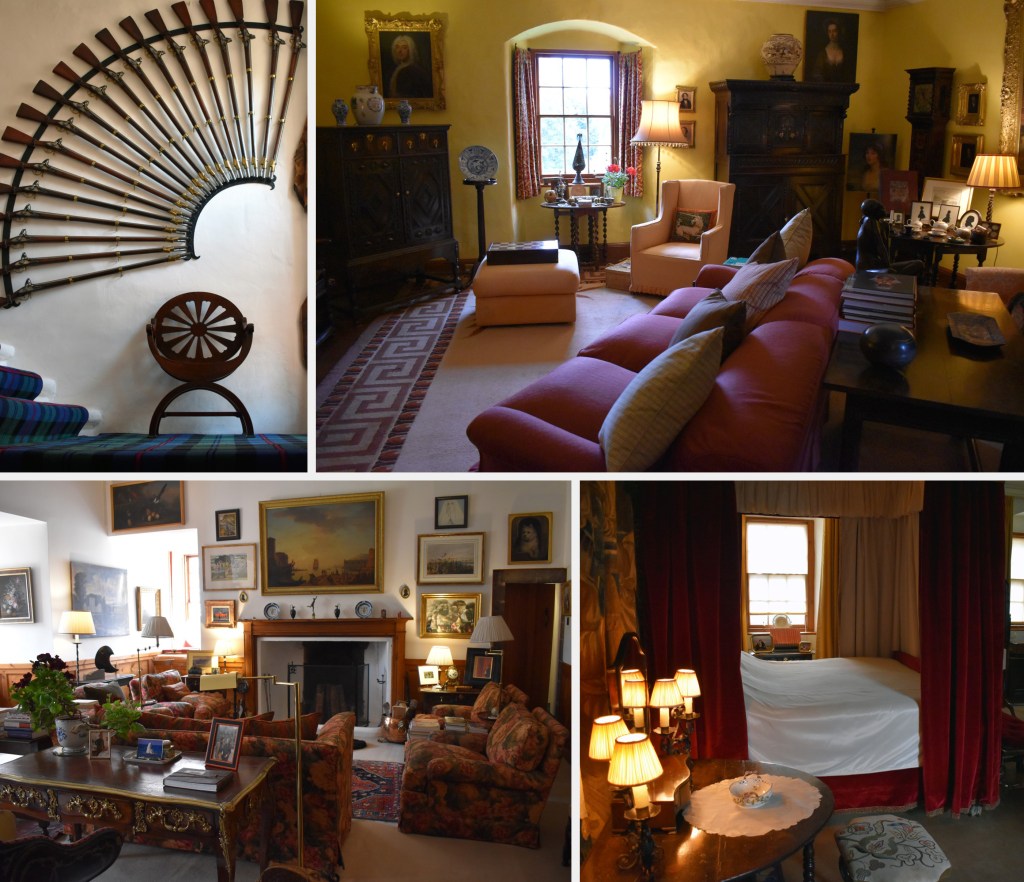
Our tour of the castle interior began in the art-filled drawing room. Cawdor Castle has an impressive collection of tapestries, paintings, furniture, ceramics, and sculptures. An avid art collector, Countess Angelika Campbell has added an eclectic mix of pieces from her travels. The castle interior feels more like a home than a tourist attraction and is in fact home to the Countess for part of the year. My favorite room of our tour was the ornate tapestry bedroom. Covering its walls are wool and silk tapestries that depict Don Quixote. I particularly loved the velvet lined bed, which was the marriage bed for Sir Hugh Campbell and Lady Henrietta Stuart in 1662. Fun fact: Inside the wooden cabinet in the sitting room is Angelika’s television.

We learned from our guide that there is an ongoing feud between the Countess and her stepchildren, especially with the eldest son Colin Campbell (the seventh Earl of Cawdor.) Colin’s father Hugh John Vaughan Campbell (the sixth Earl of Cawdor) married Angelika in 1979 and his five children disliked her from the beginning. When he died in 1993, under the terms of a secret will he left the castle and gardens to her leaving Colin with nothing but the farmland and a grouse moor. Her and Colin have been enemies ever since. In fact, there have been several court battles over the years between the two. The first was in 2001 when she prevented Colin from planting genetically modified rapeseed on the estate farmlands. The second was in 2002 when Colin moved his wife, children, and brother-in-law into the castle while Angelika was away.

Many people visit Cawdor Castle because of its connection to Shakespeare’s tragedy Macbeth. In the play, Macbeth receives a prophecy from three witches that one day he will become the Thane of Cawdor and later the King of Scotland. Macbeth did become king and ruled Scotland from 1040 to 1057. However, he was never the Thane of Cawdor, and the castle wasn’t mentioned in the play. In fact, Cawdor Castle was built three centuries after Macbeth was king, so he and Lady Macbeth never lived there.
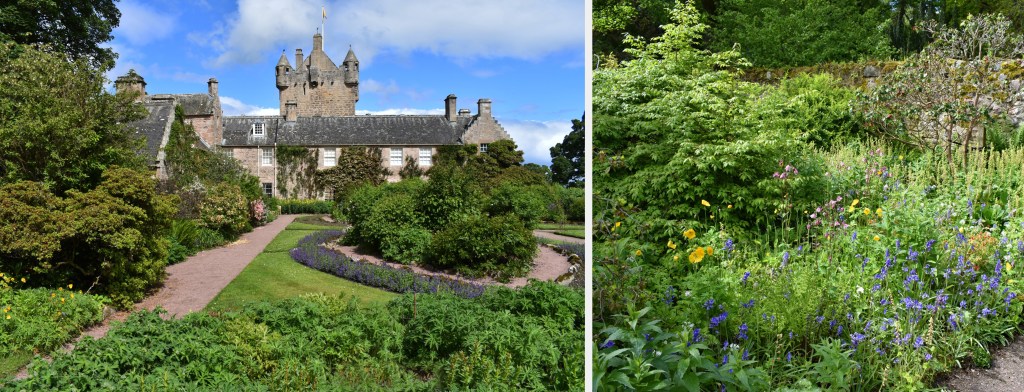
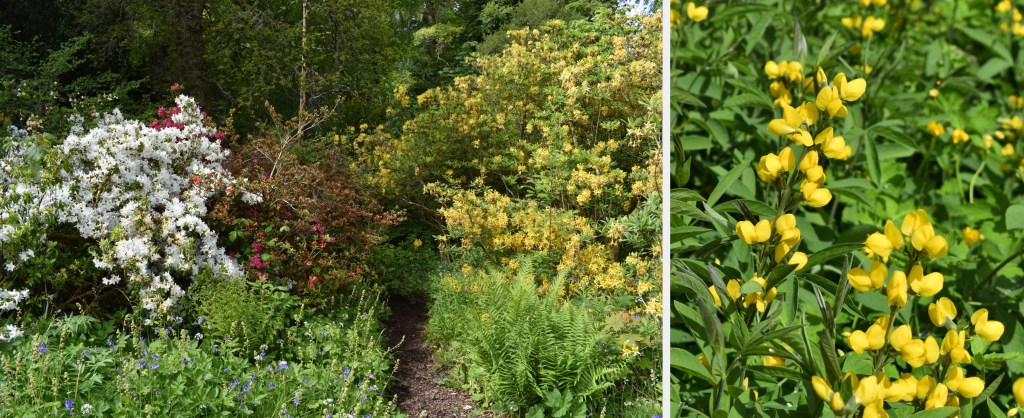
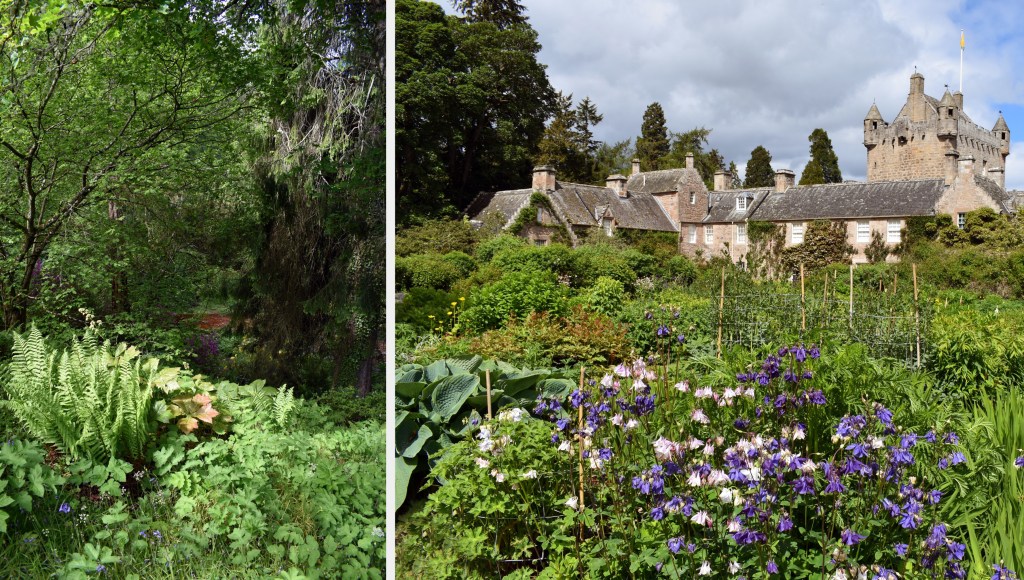
If you’ve read my Park of Monserrate blog, you’ll know that the gardens of Cawdor Castle are among my favorites. We visited in late May and the grounds were blooming with various shades of white, pink, yellow, red, and purple. The Walled Garden features a maze that depicts the Minotaur’s Labyrinth at Knossos in Crete and holds over 1,200 holly plants. At its center is a modern sculpture of the Minotaur, created by American sculptor Gregory Ryan. Numerous works of art adorn the grounds, which is included in the national list of significant gardens in Scotland. The impressive Flower Garden was added in the 18th century, and I loved the juxtaposition between the formal elements and the organic ones. The castle grounds also include a Wild Garden (added in the 1960’s) and a woodland with over 100 species of lichen.
I travel back to Portugal in my next blog where I visit the amazing Bussaco Palace and Forest.


 Travels with Terri
Leave a comment