
What comes to mind when you envision the country of Portugal? Sandy beaches, palm trees, and crystal blue waters? Rolling hills covered in grapevines? Large cities and small villages? Yes, it has all those things and so much more. Similar in size to the US state of Indiana, Portugal is a wonder of varied climates, elevations, and geography. Its lowest elevation is the Atlantic Ocean at 0 feet (0 meters) and its highest is 6,539 feet (1,993 meters) at Serra da Estrela. It amazes me that it only takes a 2-hour drive to go from relaxing on the beach to skiing in the mountains! Speaking of beaches, Portugal (including the Azores and Madeira) has more coastline than Hawaii. It also has 7.9 million acres (3.2 million hectares) of forests including Pine, Oak, Eucalyptus, Cork Oak, and Laurel. Located 21 miles (34 kilometers) from Coimbra, the National Forest of Bussaco is a treasure not to be missed.
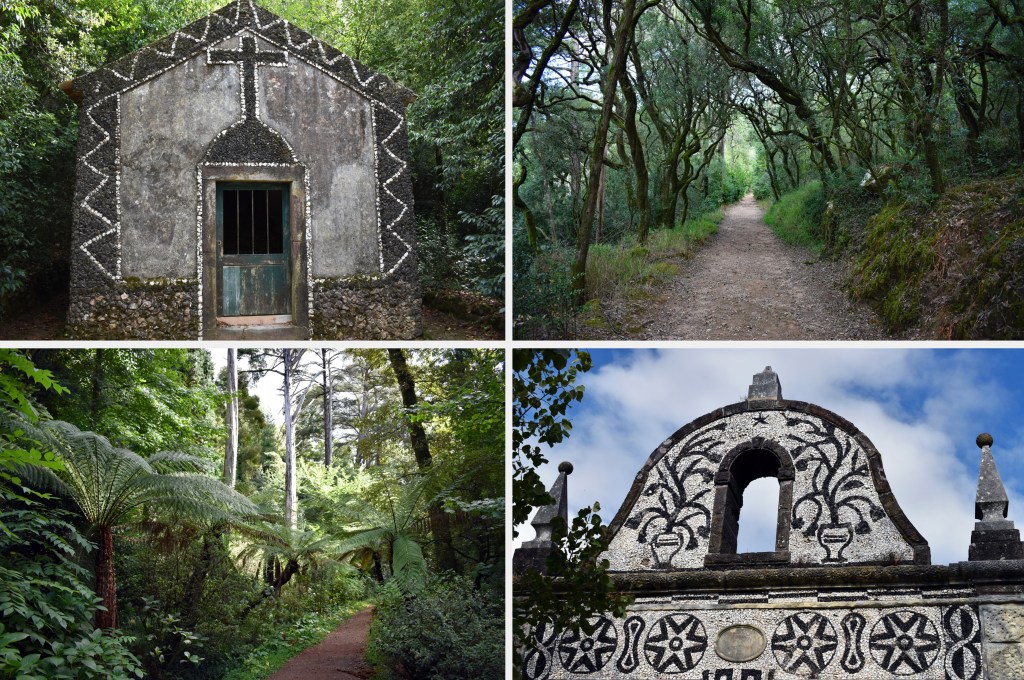
After checking into the Palace Hotel, I grabbed my camera and headed off to find the Fonta Fria (Cold Fountain) that I had seen in vlogs posted by our friends. Along the way, I somehow managed to miss the Water Trail and ended up on the Relic Forest Trail heading towards the Coimbra Gate. Guess I should have taken the trail map with me! It turned out to be a happy accident as I saw parts of the forest I would have otherwise missed. The trail system is extensive and includes the Military Trail, the Nature Trail, and the Way of the Cross Trail.

Located in the northwest end of Serra do Bussaco, the National Forest of Bussaco covers about 260 acres (105 hectares) and has over 250 species of trees and shrubs. It has four distinct landscape units: Arboretum, Gardens and Fern Valley, Relic Forest, and Pine Forest. At an elevation of 1,801 feet (549 meters), its microclimate is ideal for both deciduous and Mediterranean evergreen vegetation. 80% of the forest is occupied by the Arboretum which includes both original species and exotic species planted by Carmelite Monks in the 1600’s. Cedars, Sequoias, Araucarias (Monkey Puzzle Trees), Eucalyptus, Douglas Firs, and other non-native species were added after 1850. The Valley of Ferns (Vale dos Fetos) was created in the late 1800’s and contains several specimens of tree-sized ferns.
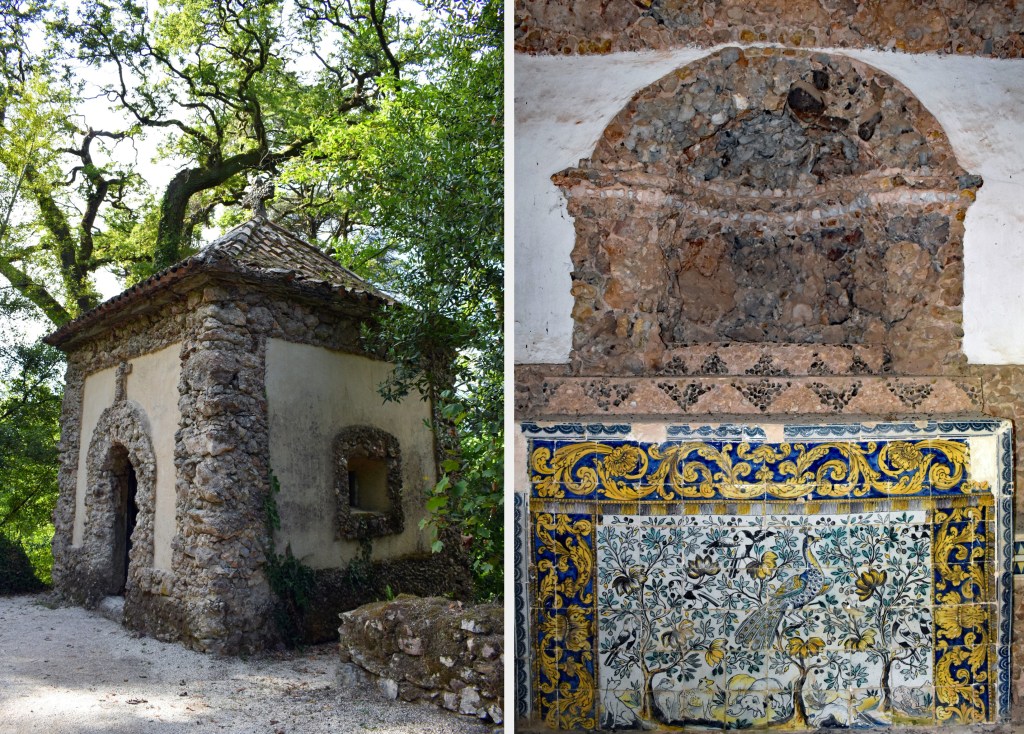
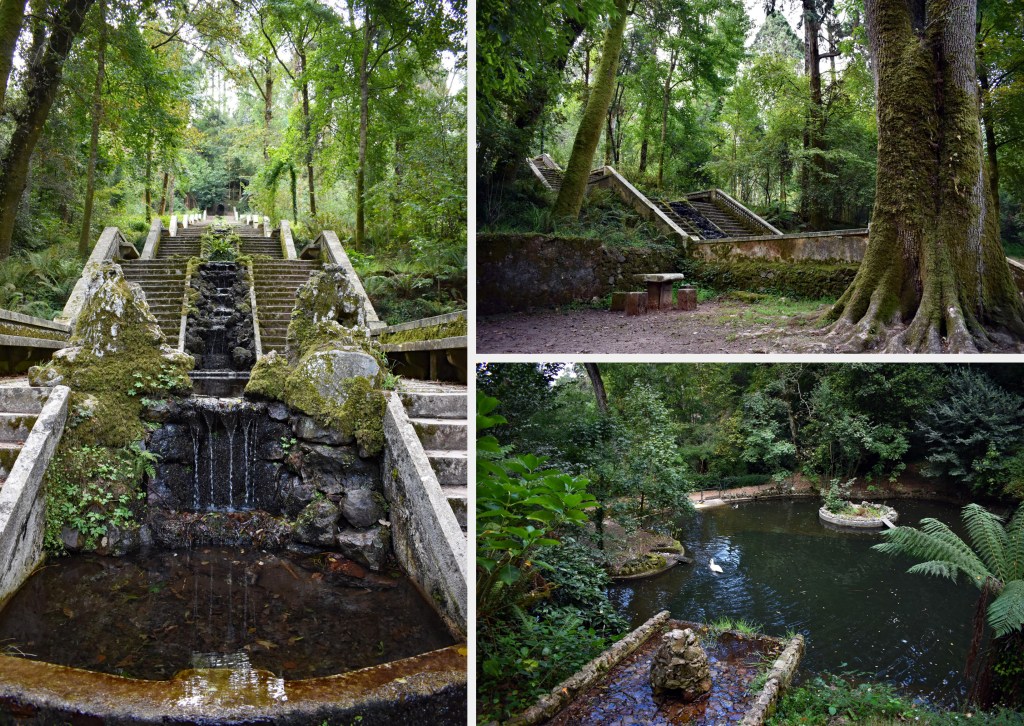
Throughout the forest there are small chapels and hermitages erected by the Carmelite Monks. On the Way of the Cross Trail, small chapels contain terracotta figures depicting the stages of Christ’s journey to Calvary. In the late 19th century, Queen Maria Pia of Savoy ordered the creation of the Fonte Fria (Cold Fountain.) Fed by a spring, the Cold Fountain cascades down 144 moss-covered stone steps and into a pond. Huge trees provide shade and there are stone tables and seats to relax and take in the beauty around you. Of all the places I saw during our stay at the Bussaco Hotel, the Cold Fountain was my favorite.

Bussaco Palace was commissioned by King Charles I of Portugal as a royal retreat and his mother, Queen Maria Pia of Savoy, hired Italian architect Luigi Manini to design it. Built between 1888 and 1907, Manini took inspiration from the Belém Tower in Lisbon and the romantic palace is a stunning example of the Neo-Manueline gothic style of architecture. It was converted into a deluxe hotel in 1917 and is listed in the travel book 1,000 Places To See Before You Die. Note: Parking on the grounds is €6.00 per car but free for hotel guests.
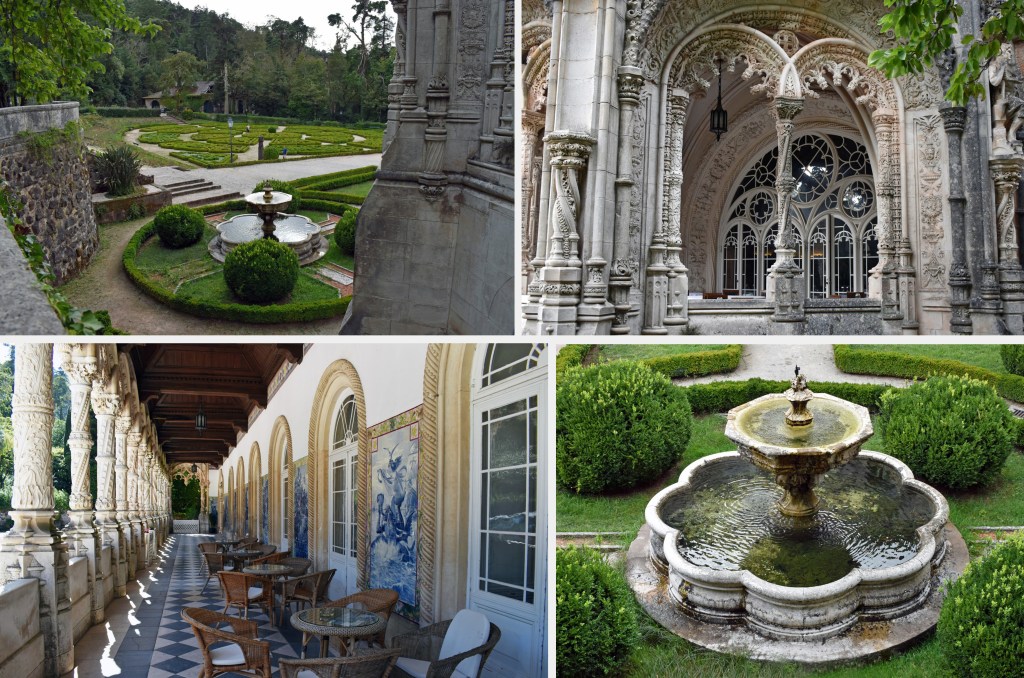
The ornate exterior features intricately carved stonework, arched windows, turrets, gargoyles, and painted tiles, and reflects both nature and the maritime history of Portugal. Complemented by the stately boxwood garden and stone fountain, its walls in varying shades of peach and beige stand out from the surrounding forest. It’s no wonder why the hotel has hosted royalty, politicians, authors, and film stars over the years. It is simply stunning!
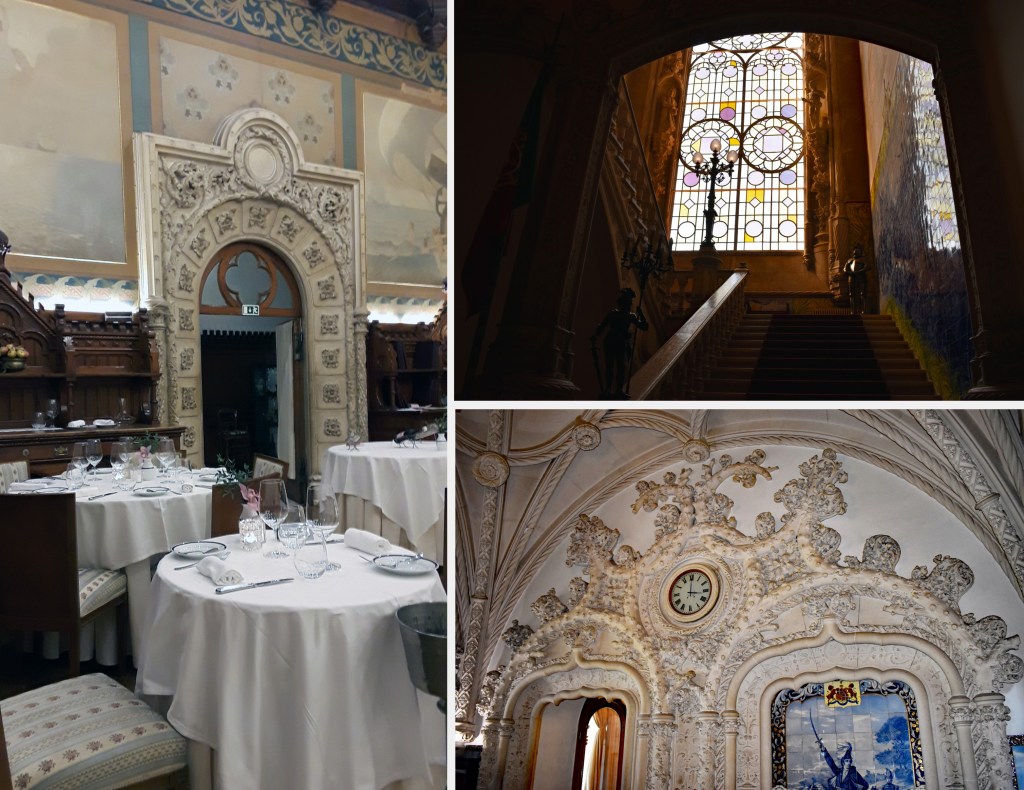
The hotel interior is equally stunning with Neo-Manueline portals, vaulted ceilings, and an impressive collection of antique furnishings and artwork. Numerous artists were hired to decorate the interior including painters António Ramalho, Carlos Reis, and João Vaz, sculptor Costa Motta Sobrinho, and tile painter Jorge Colaço whose azulejos depict scenes from the maritime history of Portugal and the famous Battle of Bussaco. I found it interesting to learn that in 1810 Arthur Wellesley (the Duke of Wellington) and his army of English and Portuguese troops defeated Napoleon’s army at Bussaco. Scenes from the battle adorn the lobby and the Military Museum holds a rare collection of weapons, maps, and uniforms.
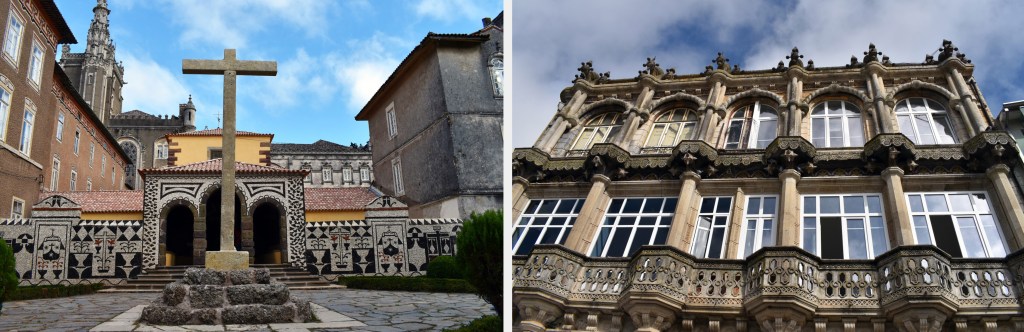
Construction of the Convent of Santa Cruz do Bussaco began in 1628 with the Carmelite Monks. In 1885, much of the convent was demolished in order to build the palace but the old church and several structures were preserved and integrated into the design. Ornate mosaic stonework in black, white, and red decorate the exterior of the church and provide a striking contrast to the light orange building.
I’ll be taking a short break from posting blogs as we’re off to Scotland soon for a driving tour of the Highlands and Islands. Stayed tuned for new posts of our trip!


 Travels with Terri
Leave a comment