
Located on Loch Fyne, the longest sea loch in Scotland, Inveraray is a quaint and picturesque town steeped in history. Its roots date back to the 1400’s when it was a fishing village. In the mid-1700’s, Archibald Campbell, the 3rd Duke of Argyll and head of the powerful Clan Campbell demolished the original village to make room for his rebuilt castle. He employed renowned architects William Adam and Robert Mylne to design the new Inveraray. Situated to the south of its predecessor, Inveraray is a stunning example of Scottish Georgian architecture.
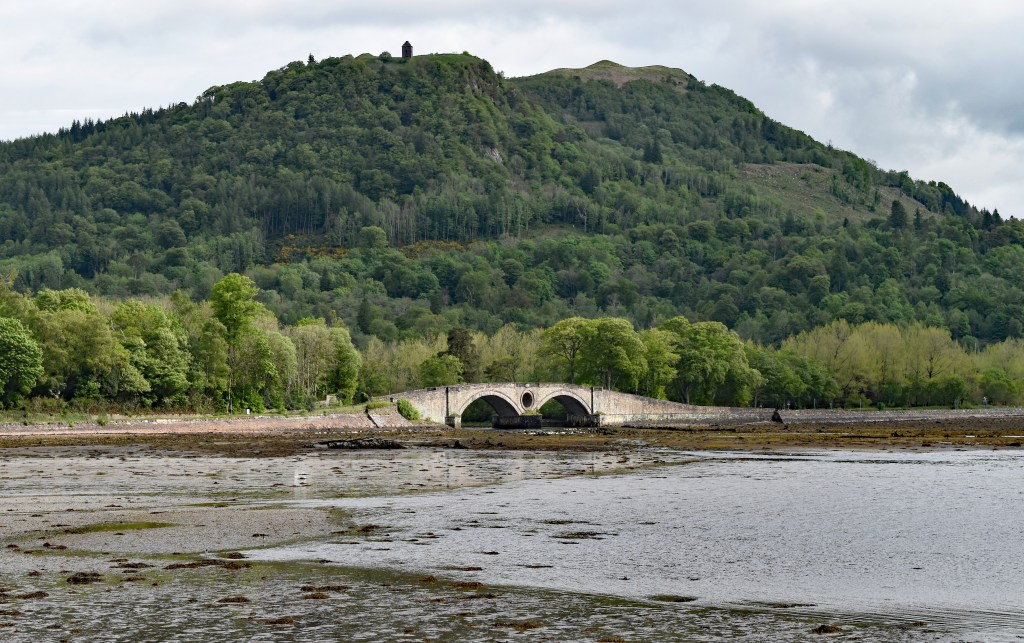
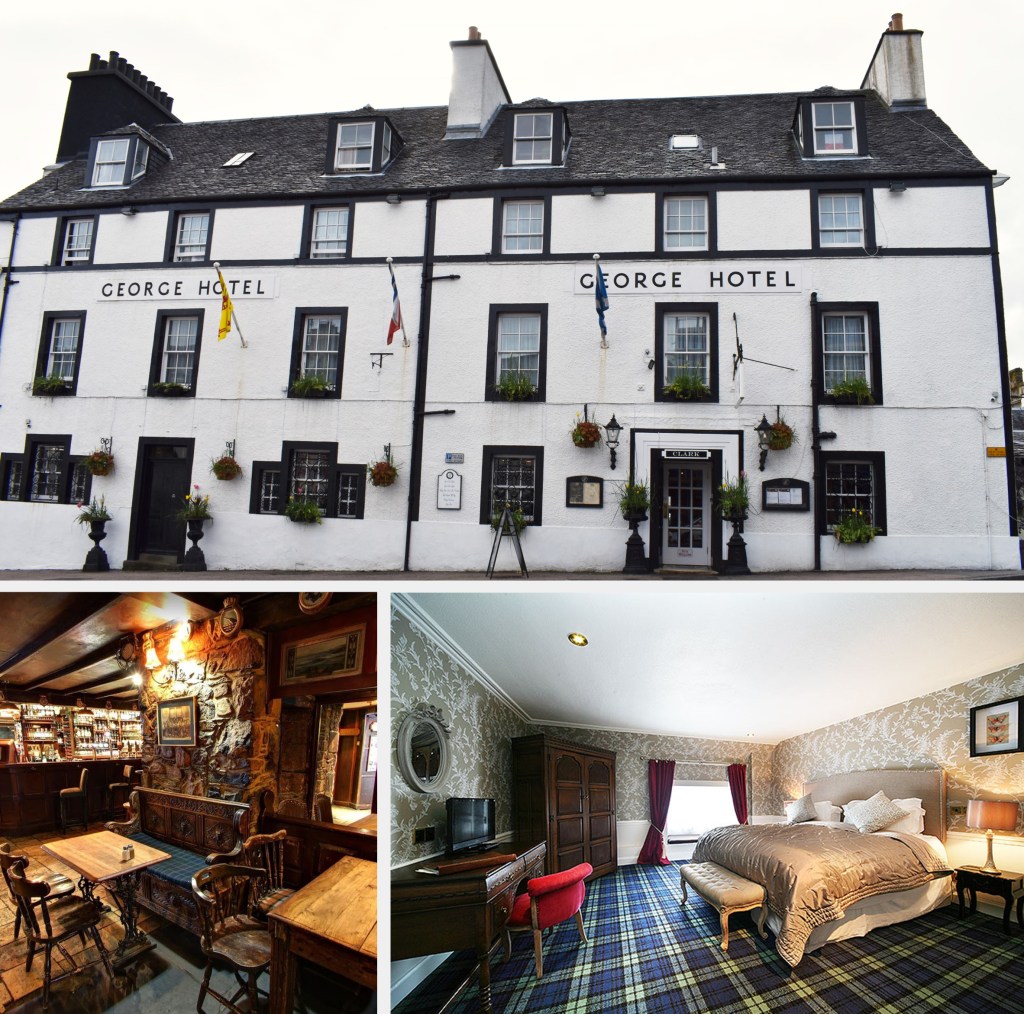
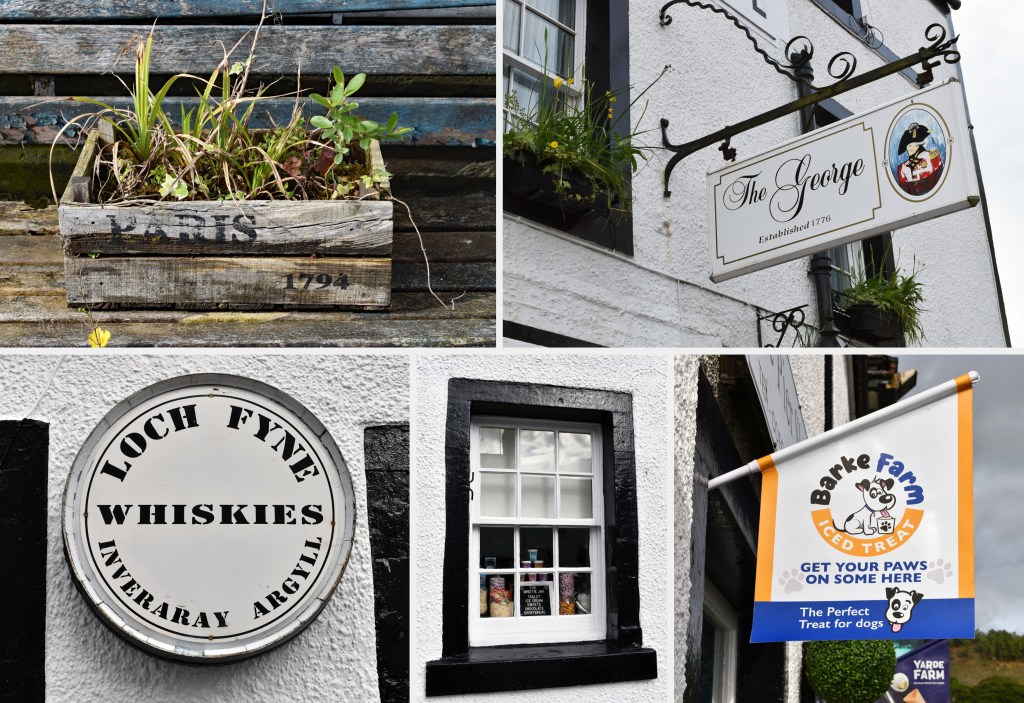
As we drove into Inveraray on Front Street, I was instantly charmed by its beauty. A grassy park along the harbor offers stunning views of Loch Fyne and the hills across. It was lightly raining, and low-hanging clouds over the loch added to the dream-like setting. Buildings with whitewashed walls line both sides of Main Street and house cafes, hotels, shops, and restaurants. The hotel we stayed at dates back to 1770 and was originally two private houses built as part of the 3rd Duke of Argyll’s redevelopment plan. In 1776, the 5th Duke of Argyll ordered that the ground floor of each house be made into temporary churches. The Clark Family bought both houses in 1860 and combined them to create a hotel. The former churches now contain the public spaces of the hotel and feature flag stone floors, open log fireplaces, and the original stone walls.
It was cloudy but dry the next morning, so I grabbed my camera and set out to explore the town. A red and black vessel in the harbor caught both my eye and my curiosity. Now named the Vital Spark, the vessel was built in 1944 by Brown’s Shipyard, Hull. Originally the VIC 72, she was a naval stores carrier until 1968 when she was motorized and used as a cargo ship. The vessel changed hands and names several times between 1972 and 2001 when she was brought to the Inveraray Maritime Museum. In 2006, she was re-registered as the Vital Spark after the fictional puffer in the Para Handy books by Neil Munro.
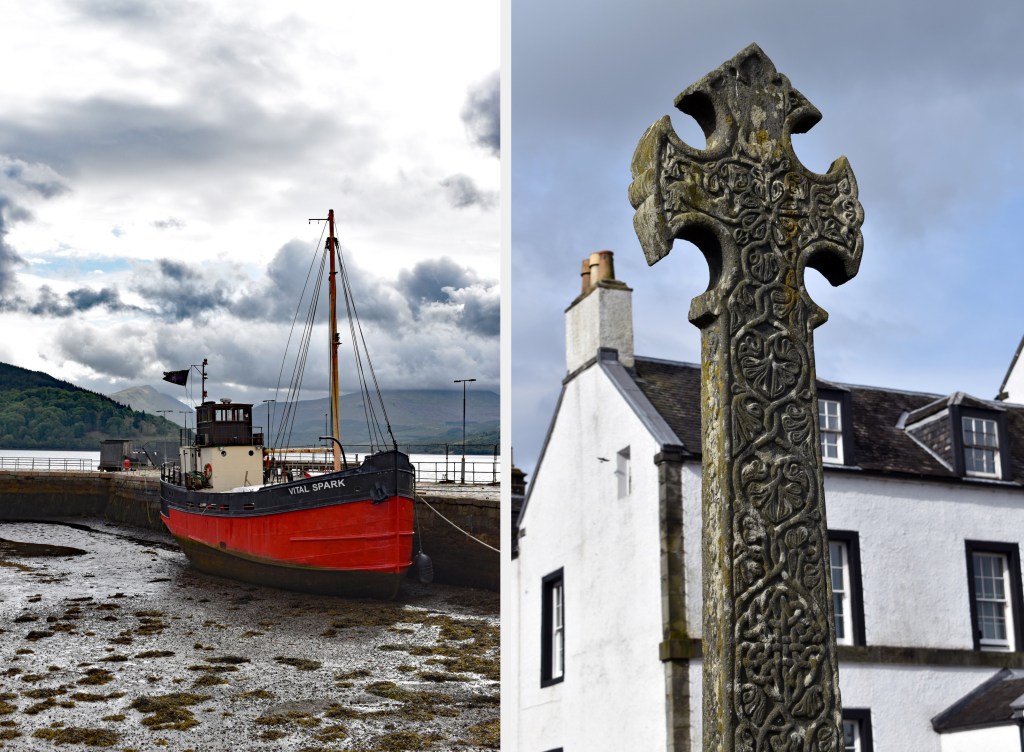
A tall stone cross along the harbor also caught my eye and upon closer inspection I noticed a woven Celtic vine design carved into the harbor-facing side. Historians have dated it to the 1400’s and believe it was originally a memorial to a noble family. Inscribed down one side (translated from Latin) it reads: “This is the cross of noble men, namely Duncanus MacCowan, Patricius, his son, and Mael-Moire, son of Patricius, who caused this cross to be made.” While its true history is unclear, a likely theory is that it was moved from a graveyard to the harbor when Inveraray was relocated. There also is evidence that it was used as a Mercat (Market) cross at some point. A Mercat cross represents the rights of a village to hold a regular market or fair and they were used for gatherings, royal declarations, and even for executions.
If you’ve read my other posts, you’ll know that I love castles, so I was delighted when our friends suggested a visit to Inveraray Castle. We walked from our hotel and along the way, we were treated to an amazing display of spring blooms. Bluebells covered the forest floor alongside ferns and verdant green grass. With a yearly average rainfall of 90 inches (230 centimeters) rhododendrons and azaleas flourish in Argyll and they ranged in color from white and pale pink to yellow, purple, and deep red. Since rain was predicted for the early afternoon, we decided to tour the gardens before going inside the castle.
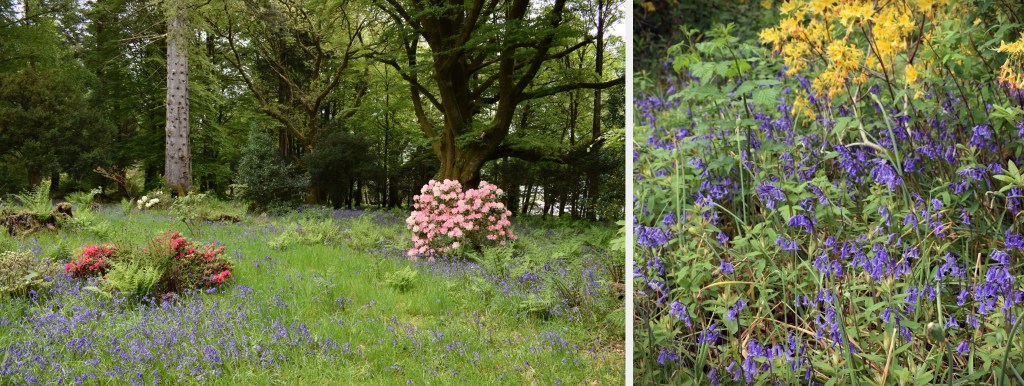
Inveraray Castle estate totals 60,000 acres (24,281 hectares) of which there are 16 acres (6.5 hectares) of gardens. A central path borders the lawn area and is lined with white wrought iron benches. Beyond the lawns are flag-borders or paths that have been laid out in the shape of Scotland’s National flag, the St. Andrew’s Cross. The woodland area of the garden contains a variety of conifer species including Himalayan Cedar, Giant Sequoia, and English Yew. Rose bushes, heather, and poppies adorn the flower beds and Japanese Maple and Flowering Cherry trees add color along the paths. We visited at the perfect time of year to see the grounds in full color.

Admission to the Castle and Gardens is £14.50 for adults with discounts for seniors and children. The price to visit only the Gardens is £7.00. Entrance to the Gift Shop and Tearoom is free. Both are worth a visit, and we enjoyed coffee and scones before touring the Castle interior.
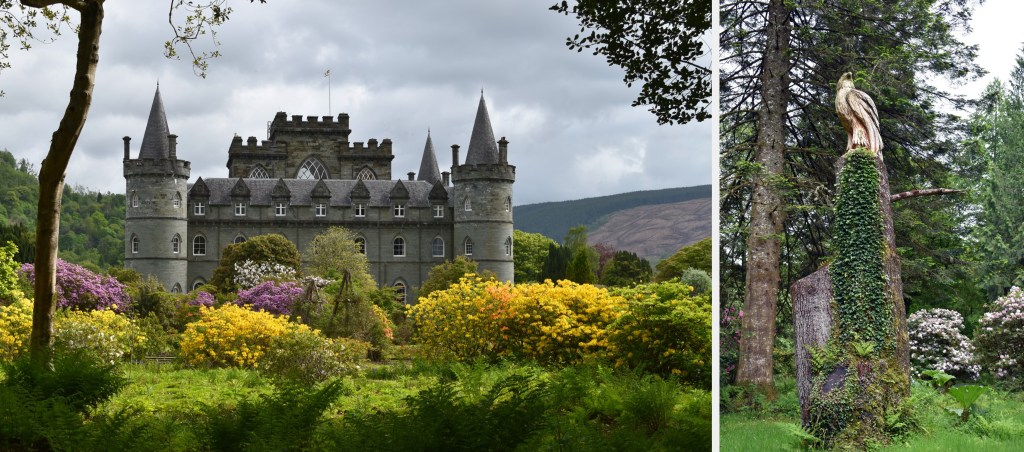
What do Downton Abbey, a grisly murder, and My Fair Lady have in common? Join me for my next post to find out!
 Travels with Terri
Leave a comment