
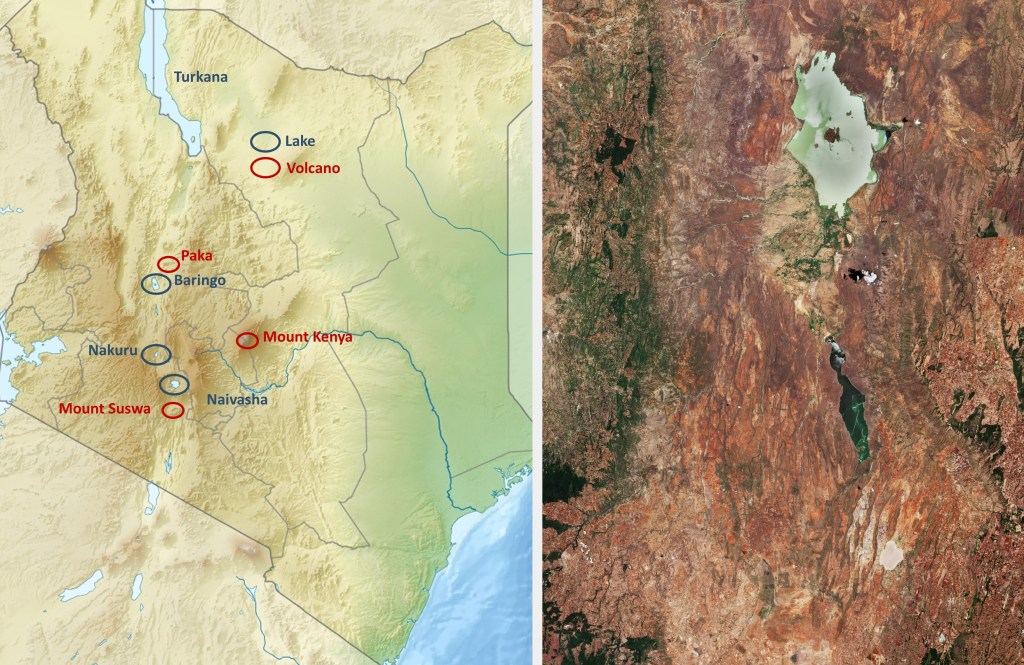
The Great Rift Valley is a series of contiguous geographic rifts and faults, approximately 4,300 miles (7,000 kilometers) in total length, which runs from Lebanon in Asia to Mozambique in Southeast Africa. Formed over 35 million years ago, the faults contain numerous volcanoes and lakes. The Eastern Rift runs from Ethiopia through Kenya and into Tanzania and was formed around 25 to 30 million years ago. Lake Turkana (Lake Rudolf) is the fourth largest of the eastern African lakes with an area of 2,473 square miles (6,405 square km). Lake Baringo to the south is much smaller with an area of 50 square miles (129 square km) and contains several small islands. Our destination, Lake Naivasha, is the highest in the Eastern Rift with an elevation of 6,180 feet (1,884 meters) above sea level. This freshwater lake has an area of 54 square miles (139 square km) and its name is derived from the local Maasai name Nai’posha, meaning “rough water.”
After a delicious and filling breakfast at Kibo Safari Camp, we began the long drive to Lake Naivasha in the Great Rift Valley. Our route took us back through Nairobi where we turned north towards Lake Naivasha Resort. The two-lane road clings to the hillside and offers stunning views of the valley to the west. We made a brief stop at a viewpoint filled with curio shops and vendors selling roasted corn on the cob. Unfortunately, I left my camera in our vehicle, so I only captured the scenery with my eyes. Back on our way, I was a bit surprised to see people throwing eaten corn cobs out of their vehicles. That was until I realized that numerous baboons line the road eagerly awaiting the yummy treats!
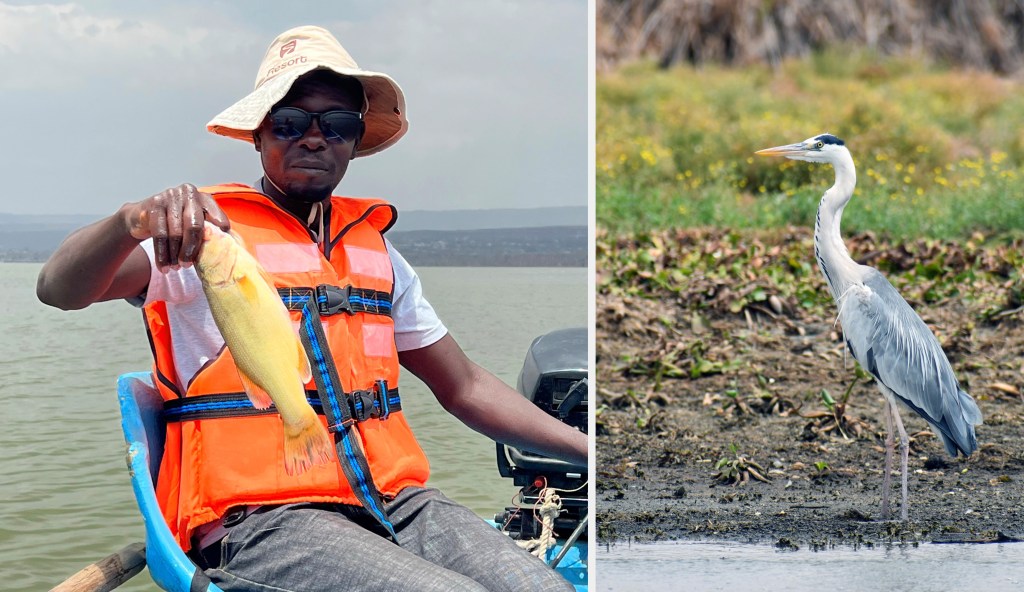
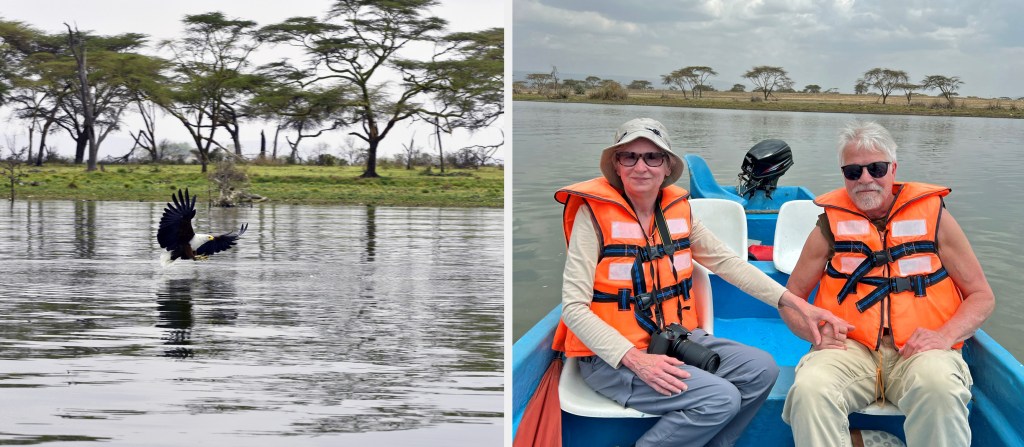
Our safari package included a private boat tour of Lake Naivasha, a freshwater lake that is home to hippos, over 80 species of birds, and fish including blue spotted tilapia, carp, and large-mouthed bass. We were warmly greeted by our guide Captain Jack who pointed out a group of hippos as we left the dock. Our first stop was to buy some freshly caught tilapia from a young man fishing nearby the shore. Jack told us that the lake is fed by several rivers and identified numerous birds as we made our way to Crescent Island. He stopped the boat near the island and told us to get our cameras ready. We watched in amazement as he called to one of the Kenyan (Fish) Eagles and threw the fish into the lake. Seeing the eagle glide from the treetop down to the water to scoop up the fish was truly special.
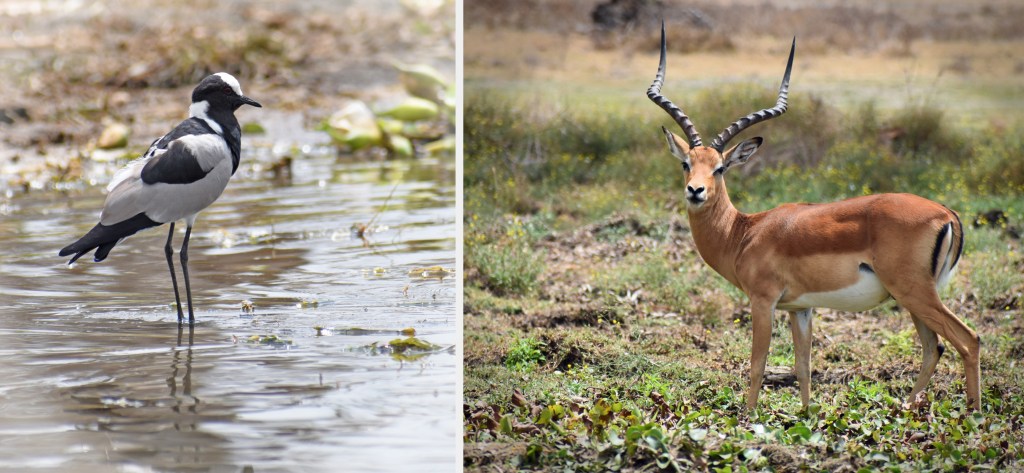
Numerous animal species live on Crescent Island including Masai Giraffe, Hippopotamus, Cape Buffalo, Impala, Defassa Waterbuck, Wildebeest, Burchells Zebra, Thompsons and Grants Gazelle, Vervet Monkey, and Spotted Hyena. Jack told us that it was a shooting location for one of my all-time favorite films, Out of Africa. As we slowly motored by, I could easily picture Karen and Denys falling in love in this stunning setting.
So just how did all these species of animals end up living on an island? In 1988, water levels in Lake Naivasha dropped so low that Crescent Island became part of the mainland. By 2020, with heavy rains the lake rose over 10 feet (3 meters) cutting off their access. The Crescent Island Game Sanctuary supplements their diet three times a week with vegetable waste, hay, and pellets, totally funded by donations. In addition to animal feeding and monitoring, the Sanctuary runs anti-poaching patrols, and education, tree planting, and grass seeding programs. They offer year-round tours of Crescent Island to support their efforts.

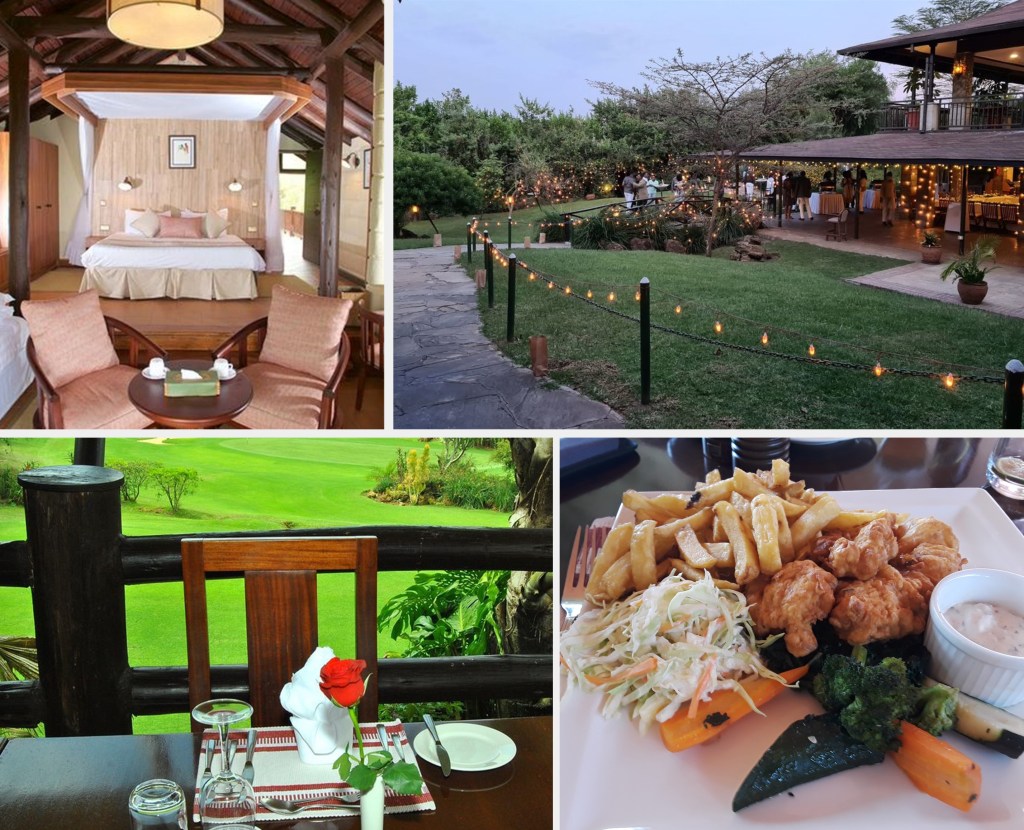
We arrived at the Great Rift Valley Lodge in time for a late lunch and a stroll around the beautiful grounds. Our spacious room had a balcony overlooking the Great Rift Valley and we enjoyed reminiscing about our adventure filled day under the starry sky.
In my next blog, we travel to Lake Nakuru National Park with the hopes of seeing White Rhinos!


 Travels with Terri
Leave a comment