
Jambo (hello) from Kenya! Whenever I travel to another country, I learn these basic words in the local language: hello, goodbye, please, thank you, and you’re welcome. English is widely spoken in Kenya as it was a British colony from 1901 to the early 1960’s with Kenya finally gaining its independence in 1963. However, Swahili is the most spoken language. Goodbye is Kwaheri, please is Tafadhali, thank you is Asante, and you’re welcome is Karibu. We learned from our guide Franco that there are over forty tribes in Kenya with the Maasai being the tenth largest. With over one million people, they live in southern Kenya and northern Tanzania along the Great Rift Valley on semi-arid and arid lands. Their lifestyle is semi-nomadic and raising cattle is their main livelihood.
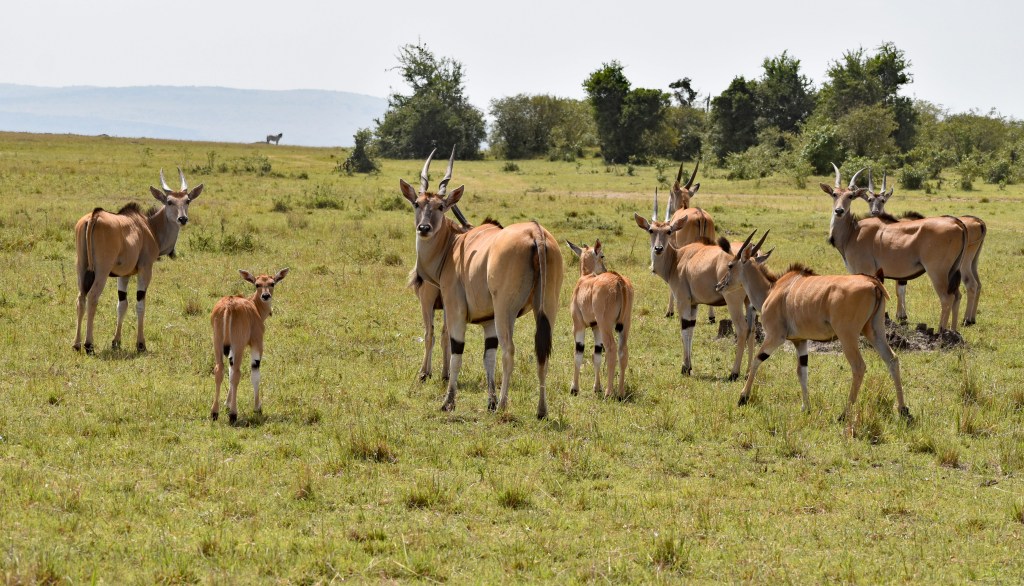
We met Franco after breakfast and began the 5 plus hour drive to our next camp inside Maasai Mara National Reserve. Established in 1961 as a wildlife sanctuary, the Mara originally covered 200 sq miles (520 sq kilometers). It gained National Reserve status in 1974 and now covers 580 sq miles (1,510 sq kilometers). Mara means spotted in the Maasai language which perfectly describes the landscape dotted with short bushy trees. Home to over 95 species of mammals and over 570 species of birds, the Mara is famous for The Great Migration. Every year between July and October, 1.5 million wildebeests, 400,000 zebras, and 300,000 gazelles trek from the southern Serengeti to the lush green grasses of the Maasai Mara.
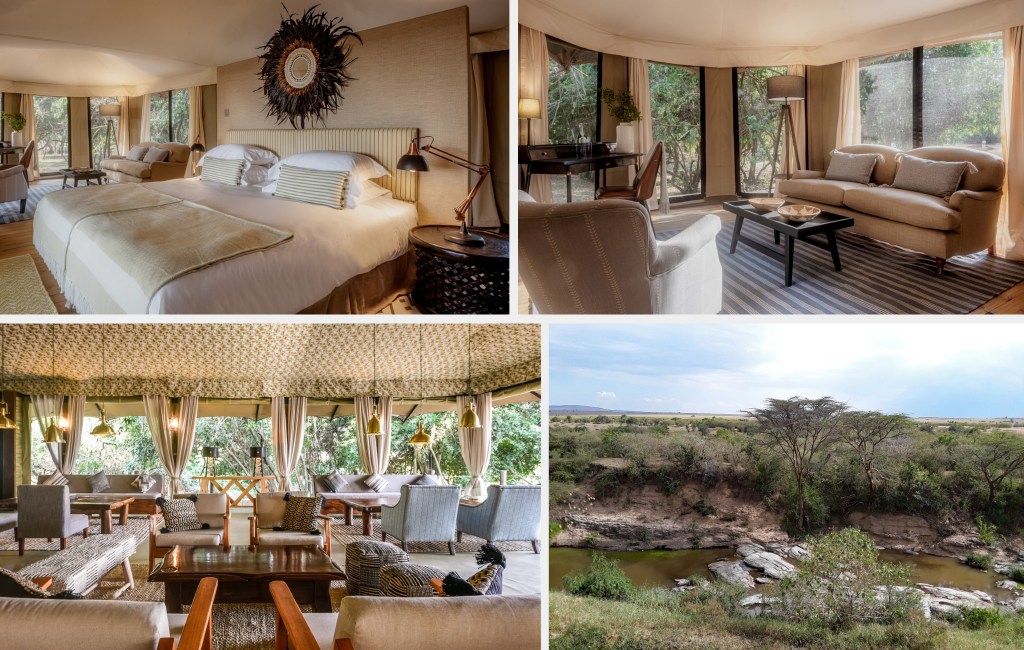
Our home for the next 2 nights was the amazing luxury camp Ilkeliani. Situated along the Talek River, the camp has stunning views of both the river and the plains of the Maasai Mara. Camp manager Eric met us in the reception area and told us all about the camp before we were escorted to our tent. There are a total of 12 tents spread out along the river with lots of space in between, creating a very private setting. Even though we’d seen pictures of the accommodation before our trip, we were blown away by both the size and appointments of our tent. Very posh indeed!
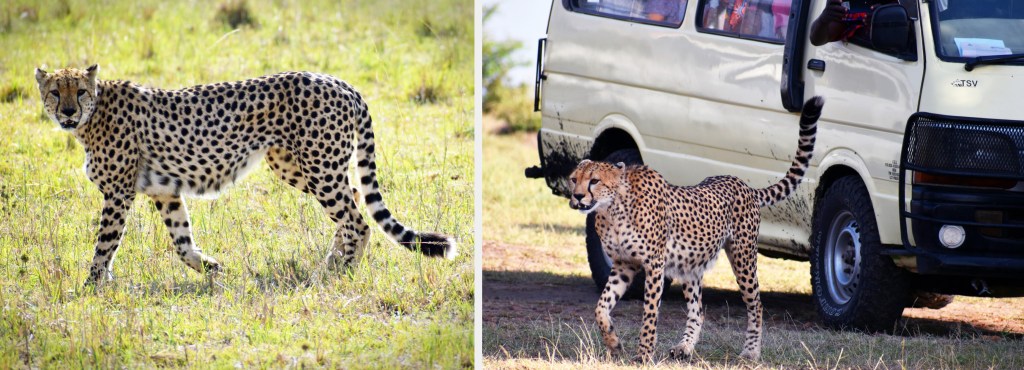
We set out early the next morning for our game drive with Franco. The safari guides all have radios, and they communicate with each other about the location and type of wildlife sightings. Since our safari took place during the low season, I was quite surprised to see around a dozen vehicles parked in a group. We soon discovered that everyone was watching a lone female cheetah. She was indifferent to the presence of so many people, having learned that humans don’t pose a threat. Franco told us that cheetahs have been seen using vehicles as cover when they are hunting prey. Female cheetahs are solitary and only interact with adult male cheetahs in order to breed. They raise their cubs on their own until they are about eighteen months old.

Our next sighting was two male cheetahs and we learned that male siblings stick together for life in a very tight-knit group of two or three. Seeing these magnificent animals up close was truly an amazing experience! Cheetahs have flexible spines and very powerful hind legs that allow them to reach speeds of up to 68 miles (110 kilometers) an hour. In just three strides they can accelerate from 0 to 40 miles (64 kilometers) per hour and their long tails function as rudders, enabling them to make sharp turns while hunting prey.

Franco’s eye for spotting animals is amazing and soon we were within 20 feet of a sleeping male lion. Between 850 to 900 lions live within the Masai Mara National Reserve and surrounding conservancies. Male lions lay claim to and defend large pieces of land ranging from 12 to 154 square miles (30 to 400 square kilometers). Their favorite prey are zebras and wildebeests, but they also enjoy warthogs and buffalos. Lions spend around 20 hours a day sleeping.
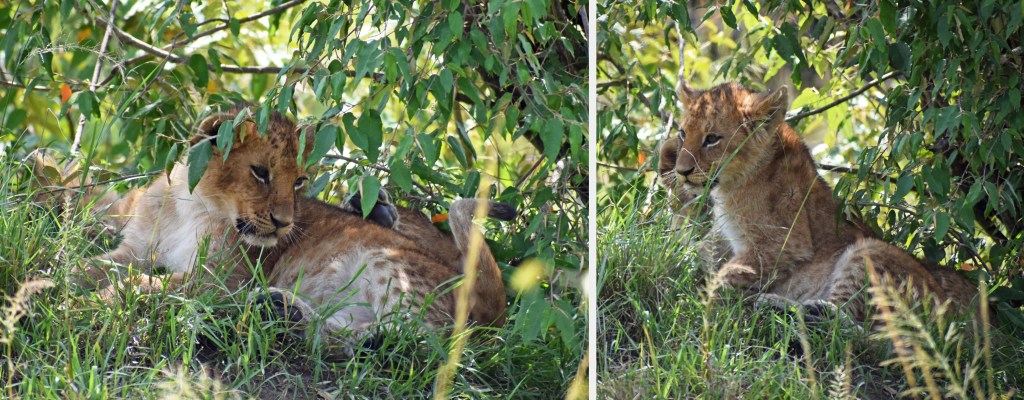
The highlight of our day was seeing a pride of lions resting in the shade with their cubs. A pride can contain between 15 to 20 lions, up to 3 males, numerous adult females (one of which is dominant), several younger females and cubs. We saw at least 3 cubs curled up and sleeping together with the pride. Lionesses rear their cubs together and cubs can suckle from any female with milk. The cubs have spots and rosettes on their sandy coats, which disappear as they mature. On average, male lions weigh 419 pounds (190 kilograms) and females weigh 278 pounds (126 kilograms), and they can eat up to 88 pounds (40 kilograms) of meat in a single meal. Adult females are the hunters of each pride, but males will assist with taking down large prey. Lions mostly hunt at night and during storms as the noise and wind make it harder for their prey to detect them.

We ended another perfect safari day back at Ilkeliani camp with a wonderful dinner and a special celebration for Rick’s birthday. Click here to watch the video.
In my next blog, we hand-feed giraffes, watch baby elephants eating and playing, and tour a bead factory that empowers women.
 Travels with Terri
Leave a comment