
The next afternoon, we said our goodbyes to Franco at our hotel in Nairobi and thanked him for the most amazing safari experience. After a good night’s rest, we left early the next morning to visit two of Nairobi’s top attractions: The Giraffe Centre and Sheldrick Wildlife Trust. The Giraffe Centre (The Africa Fund for Endangered Wildlife) was founded in 1979 by Jock Leslie-Melville and his wife Betty after they learned about the severe decline in the population of Rothschild’s giraffes in Western Kenya. Due to habitat loss, only 130 of them were left on the 18,000 acre Soy Ranch, which was being sub-divided and could no longer house the giraffes. They brought two young giraffes, Daisy and Marlon, to their home in the Lang’ata suburb, southwest of Nairobi. They raised the young calves and started a breeding program to save the subspecies. Today there are now over 300 Rothschild’s giraffes safe and breeding well in various Kenyan national parks. The Giraffe Centre provides visitors with the opportunity to get up close and personal with these magnificent animals and hosts thousands of Kenyan school children every year.
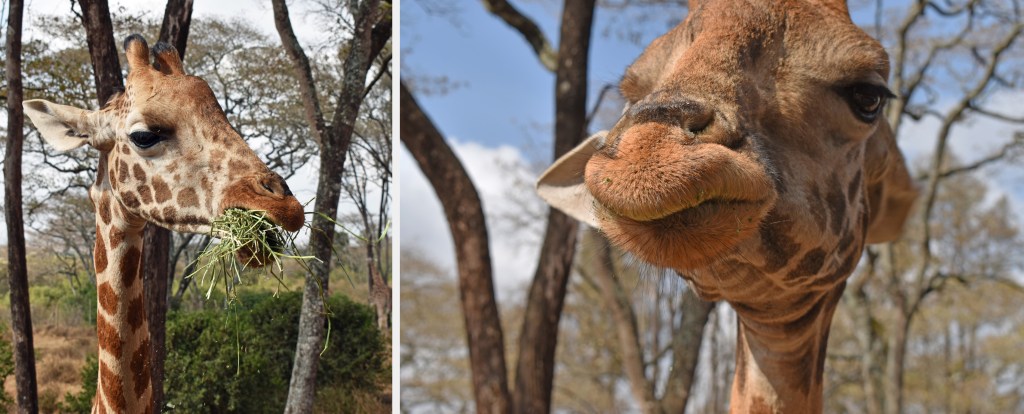
As we entered The Giraffe Centre, we were given small bowls of pellets to hand-feed the giraffes. An educator told us that the brown pellets are made from corn and molasses and the green ones are wheat and grass. There is a raised feeding platform so guests can easily offer food to them. We quickly learned about their unique personalities. For example, Daisy IV is known to butt heads against guests so be careful when taking selfies! Salma II loves to give sloppy kisses while Kelly only approaches visitors with food to offer. One of the giraffes I fed definitely has a sweet tooth, preferring the molasses pellets to the grass ones. I offered her one in each hand and she always took the molasses one first. I can’t even begin to describe the joy we felt interacting with these magnificent animals.

Here are a few facts we learned about giraffes during our visit:
- Giraffes are the world’s tallest land-living animals.
- A baby giraffe can walk within half an hour of being born and can run soon after that.
- Despite having a 6-foot-long neck, giraffes have the same number of neck bones as humans.
- A giraffe’s lungs can hold up to 55 gallons of air.
- Their skin secretes a chemical that repels insects and acts like a disinfectant.
- Giraffe horns are actually ossicones (hardened cartilage) and are covered with skin and fur. Rothschild’s giraffes are the only subspecies to be born with 5 ossicones.
- Males can weigh up to 2,500 pounds (1,134 kilograms).
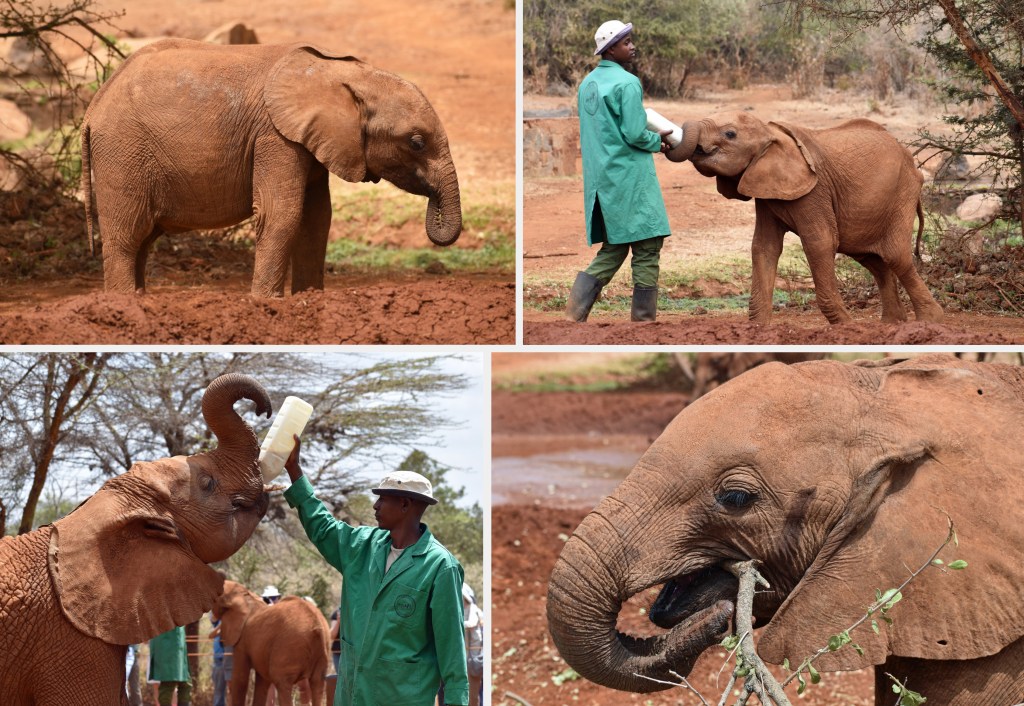
Next, we visited the amazing Elephant Orphanage (Sheldrick Wildlife Trust) located inside Nairobi National Park. Founded in 1977 by Dr Dame Daphne Sheldrick DBE, in memory of her late husband David Leslie William Sheldrick MBE, the Trust welcomes visitors daily between 11:00 am and 12:00 pm to watch the orphans being bottle fed by their keepers. Naturalist and founding Warden of Tsavo East National Park, David Sheldrick spent over two decades transforming Tsavo into Kenya’s largest and most famous National Park. Kenya-born Daphne lived and worked alongside David for over 25 years, raising and successfully rehabilitating many wild species. She was the first person to perfect the milk formula needed by milk-dependent elephants. (Baby elephants cannot properly digest cow’s milk due to its high fat content). Since her passing in 2018, their daughter Angela, son-in-law Robert, and their two grandchildren continue the important work of the Trust.
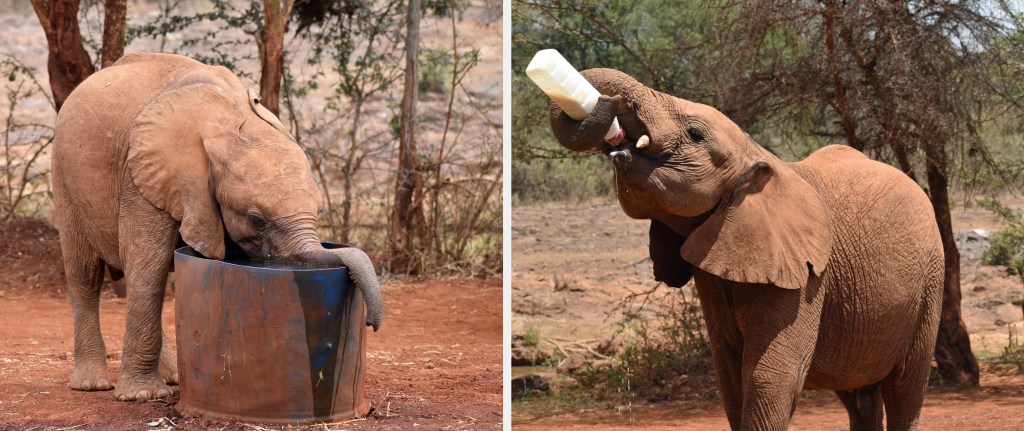
The youngest elephants enter the feeding area with their keepers first, obviously very excited to get their bottles of milk! We learned that the orphans are milk dependent for the first 3 to 4 years of life and that they each drink around 36 pints a day. The keepers live with the orphans, bottle feeding them every 3 hours. Their formula consists of human milk powder and vegetable fats with supplements added depending on their age. This group gets one bottle each which they finish very quickly. It was quite amusing to watch one of the orphans try to sneak behind the keeper to grab another bottle out of the wheelbarrow!
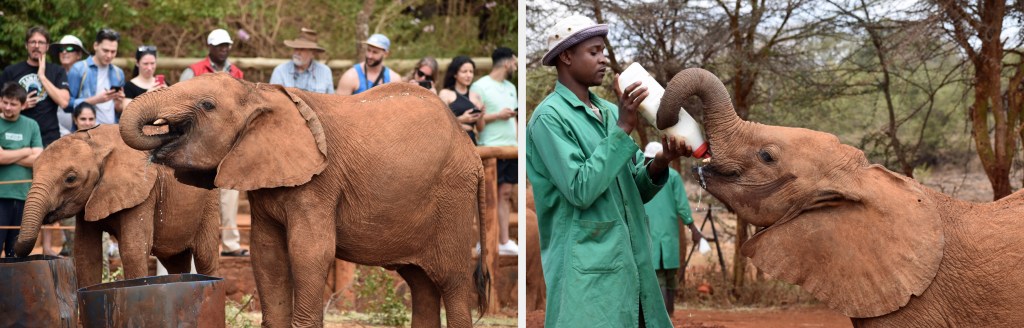
Note: Since our visit to the Sheldrick Wildlife Trust, Olorien and 2 other orphans have been successfully moved to the Ithumba Reintegration Unit in the northern sector of Tsavo East National Park. View their story here.
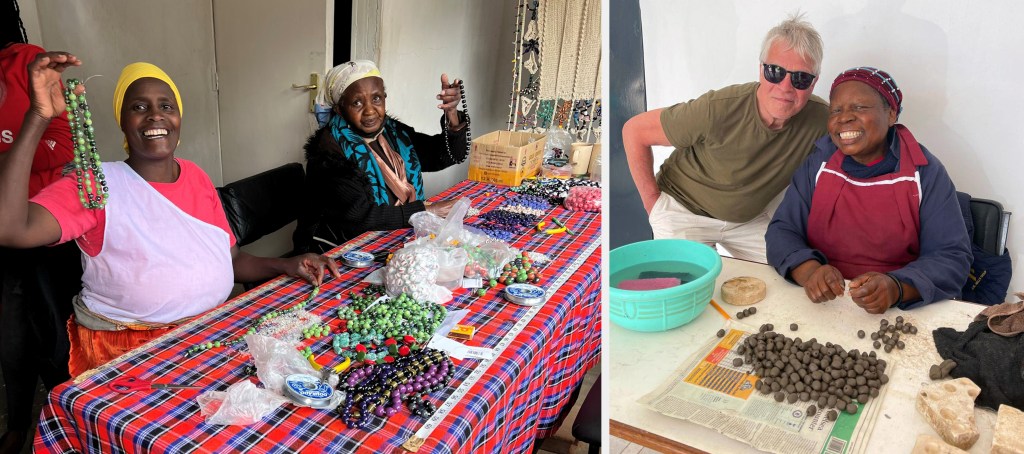
The last stop on our tour was at the bead factory Kobe Tough. The name represents the Swahili word for the African Sea Turtle (Kobe) which is both beautiful and has a hard external (Tough) shell much like the African Savannah. Kobe Tough was founded to assist the Maasai people whose survival raising and selling cattle was devastated due to the prolonged drought in Kenya. This climate crisis left communities unable to send their children to school and forced many to marry off their young daughters in return for a dowry of cows. The Maasai women who work there receive training to make high quality ceramic beads which they turn into belts, collars, watchbands, bracelets, and other beaded products. The women we met were all lovely and it was fascinating to watch the bead making process from dry clay to finished pieces of art.
In my next blog, we’re off to Barcelona Spain to meet up with dear friends for a Mediterranean cruise. Stayed tuned!


 Travels with Terri
Leave a comment