
After tasting several delicious beers at the Strahov Monastery Brewery, we headed to the impressive Prague Castle (Pražský hrad). Built in the 9th century, it is the official office of the President of the Czech Republic. Occupying an area of almost 750,000 square feet (70,000 square meters), it is the largest castle in the world. It is also one of the most visited tourist attractions in Prague with over 1.8 million visitors annually. Our guide Mesh told us that the Bohemian Crown Jewels are kept within a hidden room inside the castle.

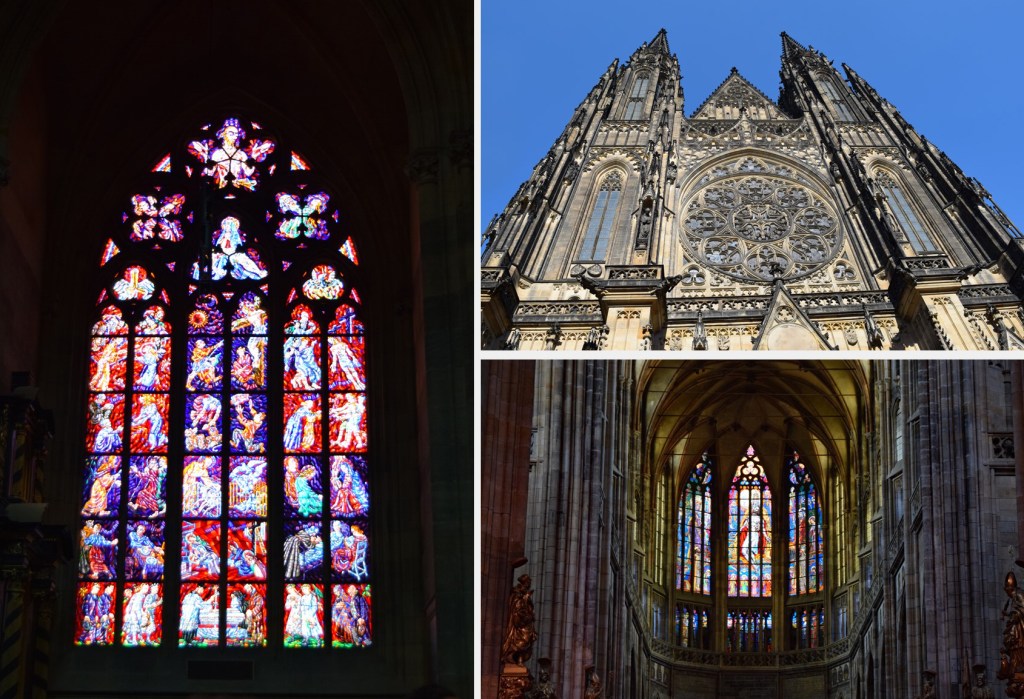
Admission to Prague Castle and St. Vitus Cathedral weren’t included in our tour but Mesh took us into the free portion of the Cathedral so we could see the stunning interior. Mostly Gothic in style, it is the largest and most important church in the country and contains the tombs of Bohemian Kings, Holy Roman Emperors, Patron Saints, and Archbishops. It has also hosted the coronations of numerous Czech Kings and Queens. The main tower is 337 feet (102.8 meters) tall, and the two front towers are 269 feet (82 meters) high. For me, the most impressive parts of the Cathedral are the gorgeous stained-glass windows and vaulted ceilings. Definitely worth a visit if you are ever in Prague.
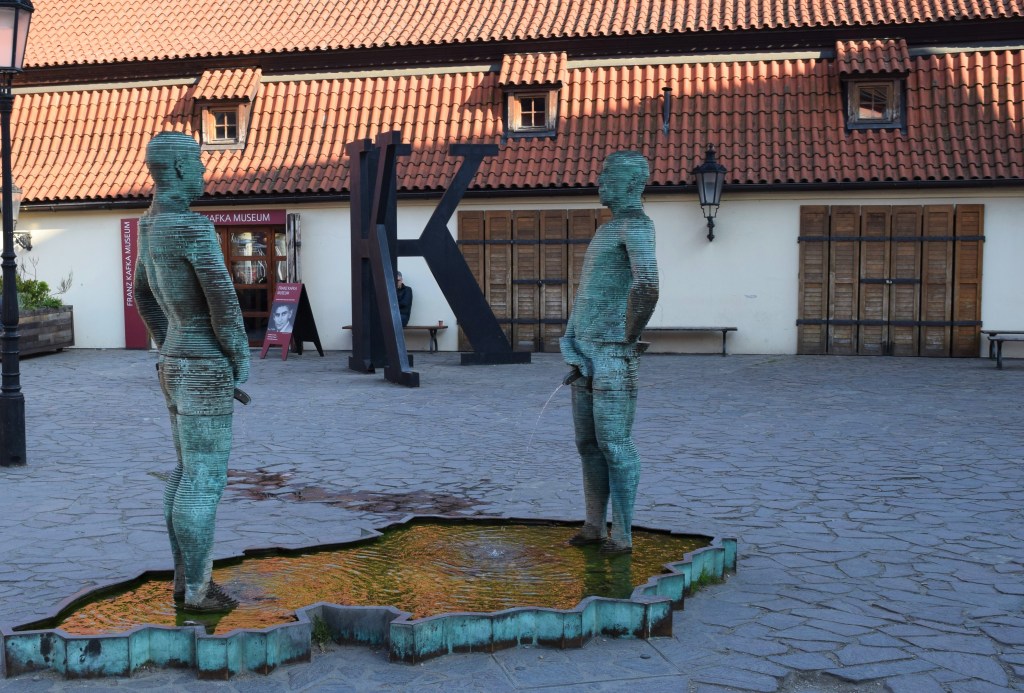
Our fantastic tour with Mesh ended in front of the Franz Kafka Museum near Kampa Island where he pointed out a unique kinetic art piece titled “Piss”. Created by Czech artist and sculptor David Černý, the piece has been controversial since its installation in 2004. The bronze fountain is shaped like the Czech Republic and there are two mechanical men who urinate into the basin. Each figure is 6 feet 11 inches (210 centimeters) tall, and visitors can command them to write messages into the water via SMS. Truly one the of most intriguing art pieces I have ever seen!
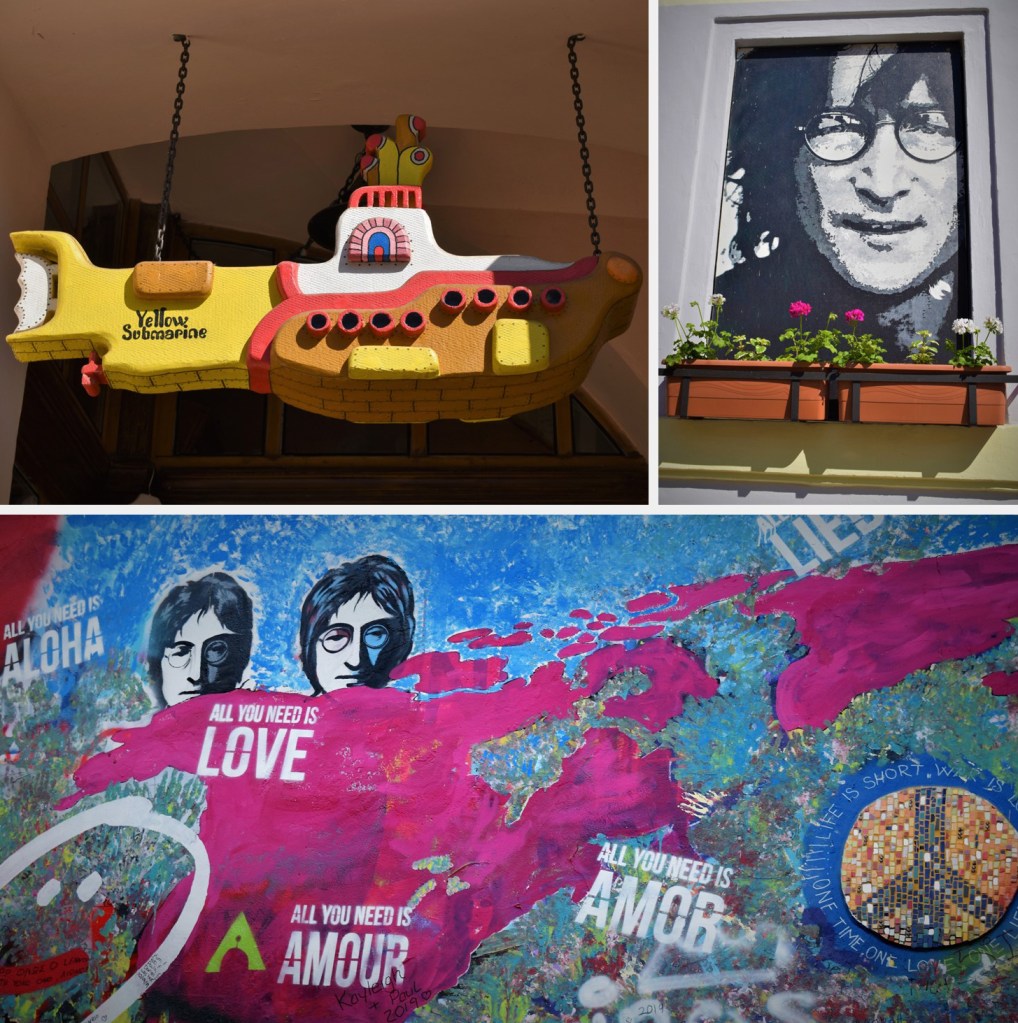
Rick and I spent our final night in Prague at a charming old hotel near the Charles Bridge. As we didn’t have an agenda planned for the day, Mesh suggested that we visit the nearby John Lennon Wall. After his death in 1980, the stone wall surrounding the Maltese Gardens was transformed into an impromptu memorial with a painting of the John’s face. Lighted candles accompanied quotes from his songs about world peace and freedom. Unfortunately, slogans criticizing the totalitarian regime began to appear diminishing the memorial to John. The wall was renovated in 2019 with a portrait of John Lennon and pictures created by more than thirty artists from five countries. The new motif is a map of the world with “Freedom” written in thirty languages.
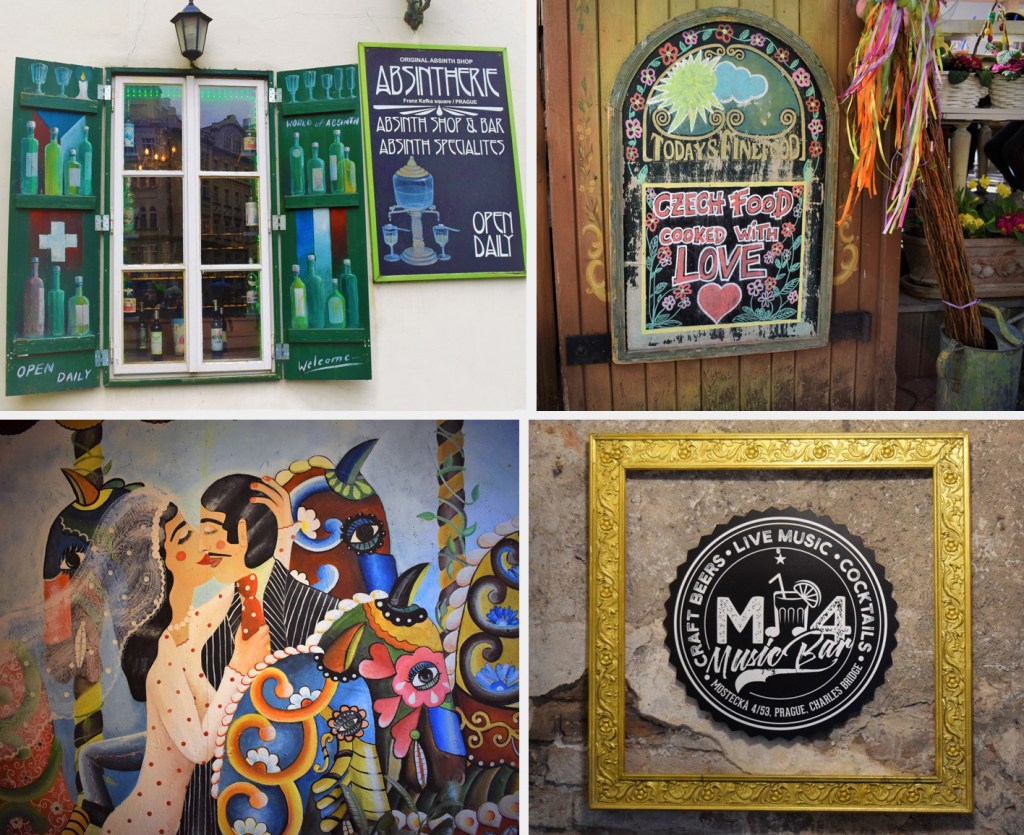
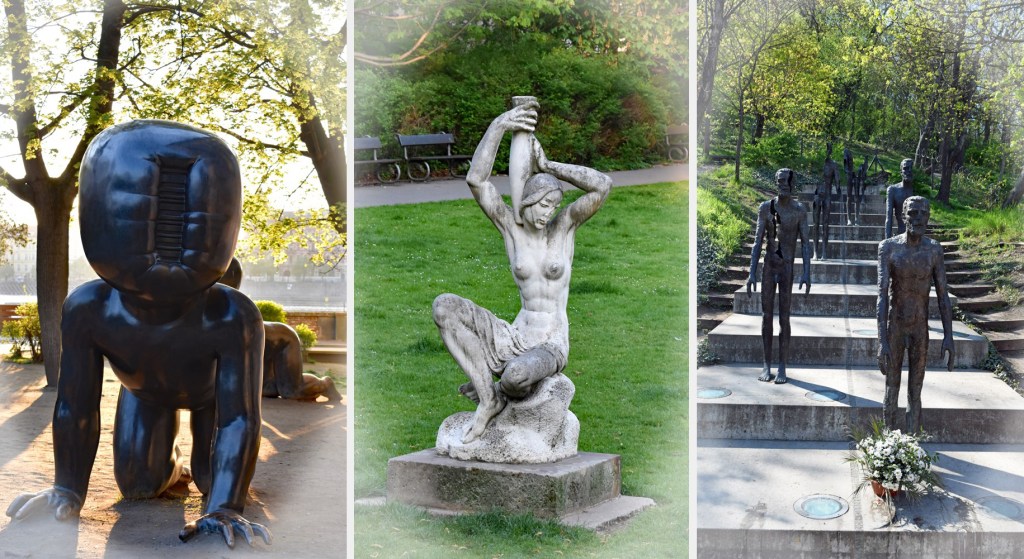
Artwork can be found anywhere in Prague if you keep a keen eye open as you wander around the city. From shop windows to restaurants and courtyards to parks, Prague is truly a visual treat. The city is home to over twenty museums including the Franz Kafka Museum, National Gallery, Jewish Museum, and museums dedicated to Czech composers Antonín Dvořák and Bedřich Smetana (one of my favorite composers). With limited time and lovely weather, we decided to save museum visits for another trip and simply take in its beauty on foot. Along the way, we discovered works ranging from colorful and whimsical to provocative and moving.
Dating back to 1410, the Prague astronomical clock (Prague Orloj) in the Old Town Square is a very popular spot for tourists. Mounted on the southern wall of the Old Town Hall, it is the third-oldest astronomical clock in the world and the oldest still in operation. When the clock strikes the hour from 9:00 am to 11:00 pm, the procession of the Twelve Apostles begins. The clock mechanism also has an astronomical dial which represents the positions of the sun and the moon and a calendar dial representing the months.
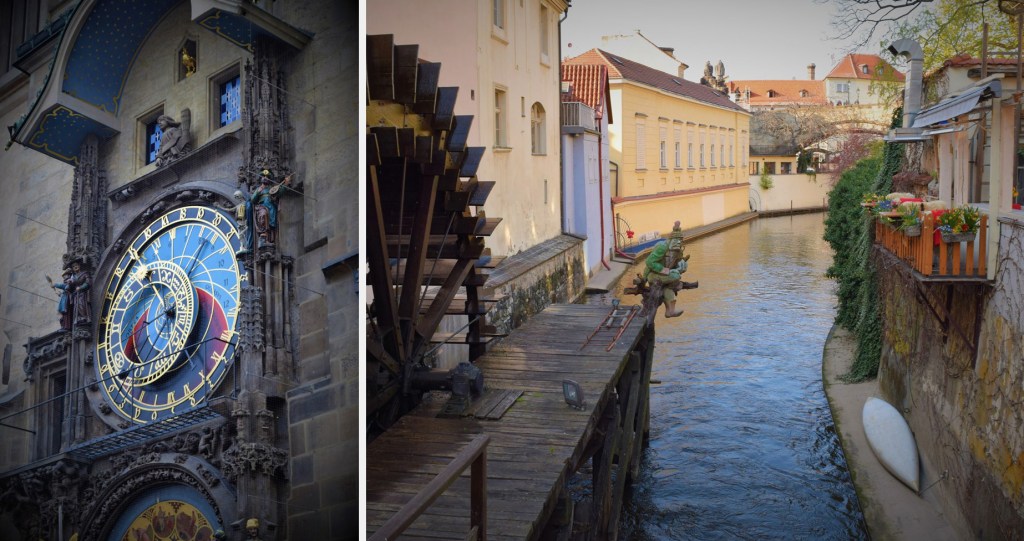
On our way back to our hotel, we discovered a channel which divides Kampa Island from the Lesser Town of Prague. Known as the Devil’s Stream (Certovka), it is one of the most picturesque spots in Prague. While the origin of the name Certovka (locally known as Prague Venice) is unclear, some legends claim that it was due to a devilish woman who lived nearby. The Knights of Malta created the channel in the middle ages to regulate the flow of water to the nearby mills. An old wooden waterwheel, the Grand Priory Mill, is one of the two remaining on the channel. Sitting at the edge of the waterwheel is a little green man with a curly pipe known as Vodník (Water Man.) A Vodník can either be benevolent force or a demon. Superstitious river workers used to blame all kinds of woes on this pagan creature and made sacrifices to stay on his benevolent side. If the Devil’s Stream looks familiar, several films including Mission Impossible and Amadeus were shot there.
Cover Photo: View of Prague from the Petřín Funicular
I’m keeping my next blog location a secret but here are a few hints: It’s in Europe, is home to an annual film festival, and several movies have been filmed there.


 Travels with Terri
Leave a comment