
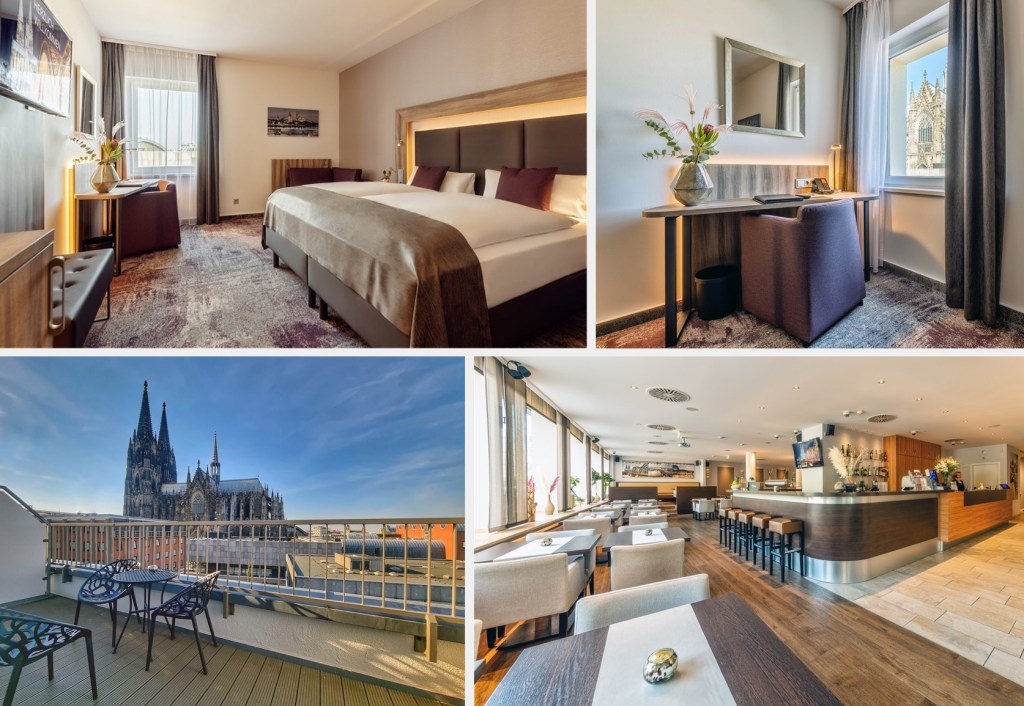
Rick and I finished our trip to the Czech Republic and Germany with three nights in Cologne. The train journey from Berlin takes less than five hours and offers stunning views of the countryside along the way. We choose the CityClass Hotel am Dom due to its proximity to the train station, the Rhine River, and Cologne Cathedral. There are numerous restaurants, shops, bars, and attractions within a short walk so the location is perfect for exploring the city. The hotel is lovely, and we were quite impressed with both the size and amenities of our room. From our terrace, we had an amazing view of the Cathedral and enjoyed some local beers while watching the sunset.
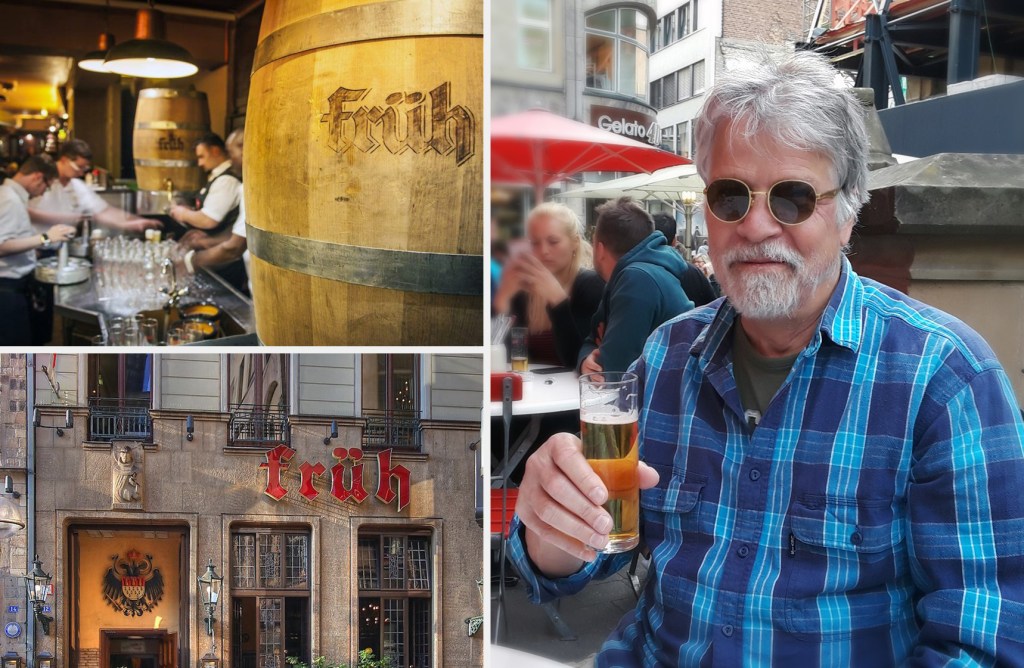
While pilsner (Pils) is the most popular beer throughout Germany, Cologne favors the light carbonation of Kölsch. It is traditionally served in a tall, thin 6.8-ounce (200-milliliter) glass called a Stange. Just a short walk from our hotel, we discovered the historic Cölner Hofbräu FRÜH and enjoyed a wonderful lunch in their beer garden. Founded in 1895 by Peter Josef Früh, the main house burned down during World War II but the brewery itself managed to survive and has been producing beer ever since. When Rick ordered a Kölsch, the server made a mark on his coaster and as soon as he finished the glass, it was re-filled and marked on the coaster. We noticed this happening at all the tables around us and learned that your glass will be re-plenished until you place the coaster on top to indicate that you are finished. Much easier than trying to get the attention of your server to order another beer! The marks on your coaster are tallied and added to your bill.
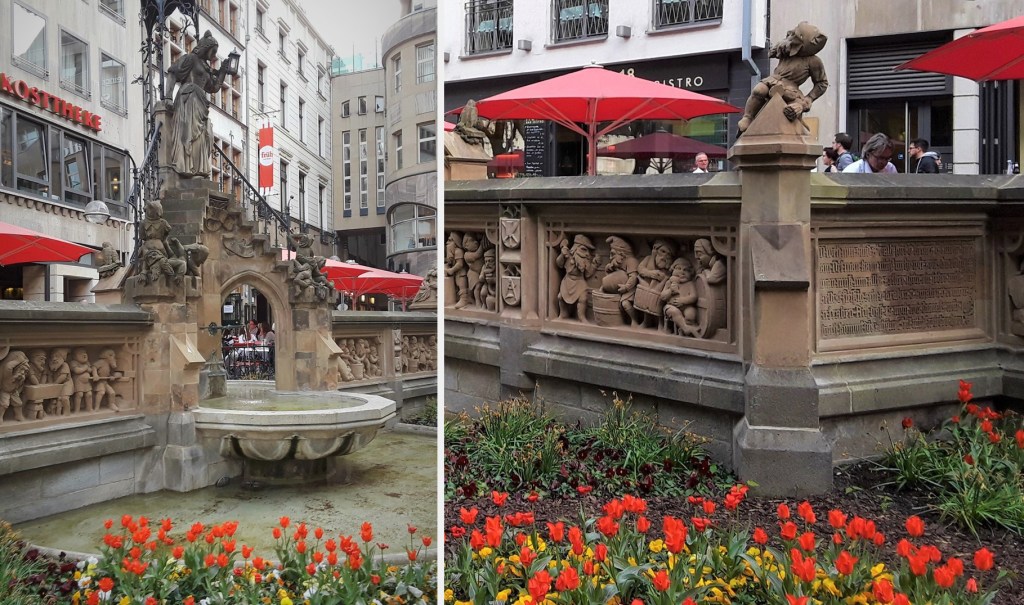
Adjacent to FRÜH, is the ornate Pixies’ Fountain (known as Heinzelmännchenbrunnen). Built in 1899, the stone fountain depicts the legend of the Pixies (Heinzelmännchen) who did the work of bakers, tailors, carpenters, and butchers during the night. Similar to the Brownies of Scotland and the Kabouters of the Netherlands, Pixies were tiny, diligent, and wore pointed caps. Working in secret, their efforts allowed the artisans of Cologne to lead a life of leisure. The centerpiece of the fountain depicts a woman holding a lantern at the top of a stairway. The woman, a curious wife of a tailor, scattered dried peas on the stairs causing the Pixies to slip and fall. Once discovered, they left forever, forcing the residents to resume their work.
One of my favorite things about travel is discovering new food. The dining choices close to us in Portugal are rather limited so whenever we visit a large city, we seek out both local and international cuisine. For those with a sweet tooth like me, a “must-try” is a Berliner. Similar to a jelly doughnut, these light pastries are dusted with sugar and filled with a fruity jam. The one I tried at Merzenich Bakery was hands-down the best doughnut I’ve ever had! All of their products are made by hand and include bread, rolls, croissants, pretzels, and cakes. Another decadent dish I had to try was Spätzle with cheese. These egg dumplings remind me of the ones my Hungarian mother used to make but instead of gravy they were covered in cheese. A yummy German version of macaroni and cheese! For some lighter fare we dined at a Thai Restaurant near our hotel. Good Thai food is hard to find near us in Portugal so we both really enjoyed the tasty and authentic menu.

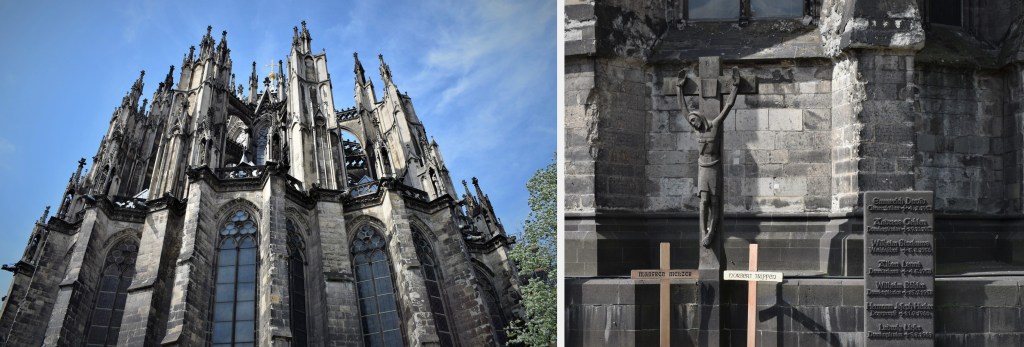
Cologne Cathedral is Germany’s most popular landmark and a UNESCO World Heritage Site. Its construction began in 1248 and was completed 632 years later in 1880. At 515 feet (157 meters) tall, it is the third largest Gothic style cathedral in the world and receives 20,000 visitors each day. 300,000 tons of stone were used in its construction, and it has the largest window area of any church in the world with more than 107,000 square feet (10,000 square meters). Unfortunately, we never made it inside the Cathedral due to the long line of cruise ship passengers waiting for their tour. Instead, we took a narrated hour-long boat trip on the Rhine and had stunning views of the Cathedral, the Hohenzollern Bridge, and Kranhaus (Crane House). We were both very impressed by the mix of old and new architecture on both sides of the Rhine.
One of the most colorful parts of Cologne is located in Old Town, close to the Rhine River. Extending between the Old Market, City Hall, and the Fischmarkt (Fish Market), it is home to some of the historic houses that survived WW II. The Romanesque church of St. Martin-the-Great is a major highlight of Old Town. It was built between 1150 and 1250 and it is considered the most beautiful of Cologne’s twelve Romanesque churches. Our boat tour passed by the impressive and modern Kranhäuser (Crane Houses), a series of three upside-down L shaped buildings that house offices and luxury apartments. Their shape resemble the harbor cranes that were used to load and unload cargo from ships which transported goods on the Rhine. The first of the 17-story buildings was completed in 2008.
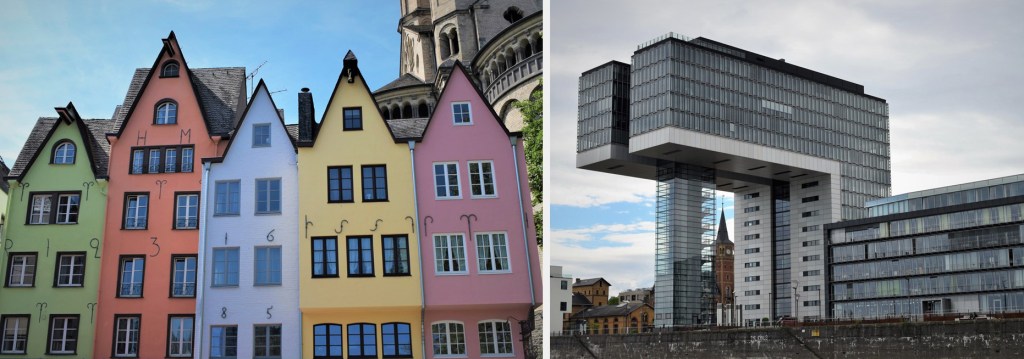
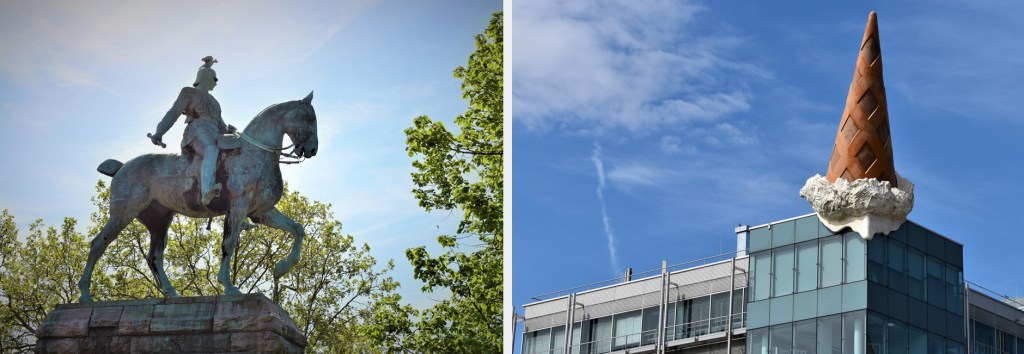
Art abounds in Cologne in both museums and public spaces. Located on the western side of the Hohenzollern bridge is a bronze equestrian statue of Kaiser Wilhelm II, King of Prussia, and the last German emperor. His reign lasted from 1888 until the revolution of 1918 when he was forced to abdicate the throne. It was constructed in 1910 by German sculptor Louis Tuaillon. The whimsical piece “Dropped Cone” adorns the roof of the shopping gallery at Neumarkt (New Market). It was created in 2001 by Pop Art couple Coosje van Bruggen and Claes Oldenburg who took their inspiration from the advertising signs of the surrounding ice cream parlors.
In my next blog, we spend a few days in Paris eating and drinking our way around the Latin Quarter. Stay tuned!
Cover Image: View of Cologne Cathedral from our hotel room terrace, Fountain in Old Town, Twilight in Cologne


 Travels with Terri
Leave a comment