
No visit to Lisbon would be complete without spending some time in Belém. Rick and I have stayed there twice and have yet to scratch the surface of everything it has to offer. From monuments to museums and from parks to promenades, Belém will appeal to history buffs, nature lovers, families, artists, and tourists alike.
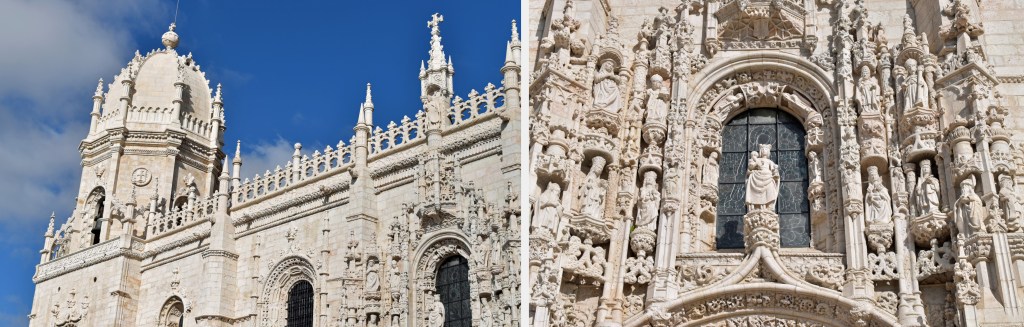
Often called the jewel of Belém, Jerónimos Monastery was commissioned by King D. Manuel I in 1501 in honor of explorer Vasco da Gama’s discovery of a sea route to India. The church and monastery are among the best examples of Manueline architecture in Portugal. Named after King Manuel, typical Manueline structures feature nautical motifs of ropes, spheres, anchors, and the ocean, and exotic elements from Asia such as palm trees and elephants. Architect Diogo de Boitaca began the design but was replaced in 1517 by João de Castilho, who added the carved stone arches and balustrades in the cloister. The south portal of the church features ornate statues including St. Michael the Archangel (the Patron Saint of Portugal) and Our Lady of Belém. The monastery was occupied by the Order of St. Jerome (Hieronymites) until 1834 when all the monasteries in Portugal were closed down. Admission is €10.00 for adults with discounts for seniors and families.
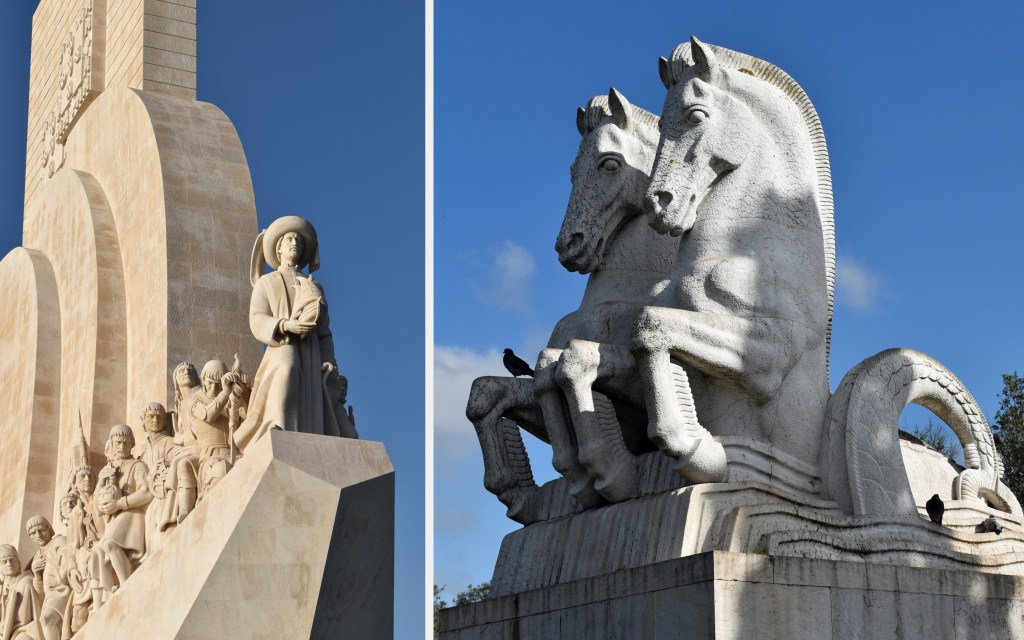
With its striking location on the banks of the Tagus River, the Monument to the Discoveries is another jewel in the neighborhood of Belém. It was first constructed in 1940 by architect José Ângelo Cottinelli Telmo and sculptor Leopoldo de Almeida as a part of the Portuguese World Exhibition. It was reconstructed in 1960 to commemorate the 500-year anniversary of the death of Henry the Navigator. Resembling a caravel heading out to sea, the monument features 33 figures of importance in the history of Portuguese expansion. Each holds a symbol alluding to their role as navigators, artists, cartographers, colonizers, and missionaries. Of note are explorers Henry the Navigator, João Gonçalves Zarco, and Gil Eanes, as well as mathematician Pedro Nunes and painter Nuno Gonçalves. Made of limestone from Sintra and rose-tinted stone from Leiria, the monument is 66 feet (20 meters) wide, 151 feet (46 meters) long, and 249 feet (76 meters) tall including its foundation. Tickets for the exhibition, viewpoint and film are €6.00 for adults. Discounts are offered for seniors and students. Tip: For stunning views of both the Monument to the Discoveries and Belém Tower, take a boat tour on the Tagus River.
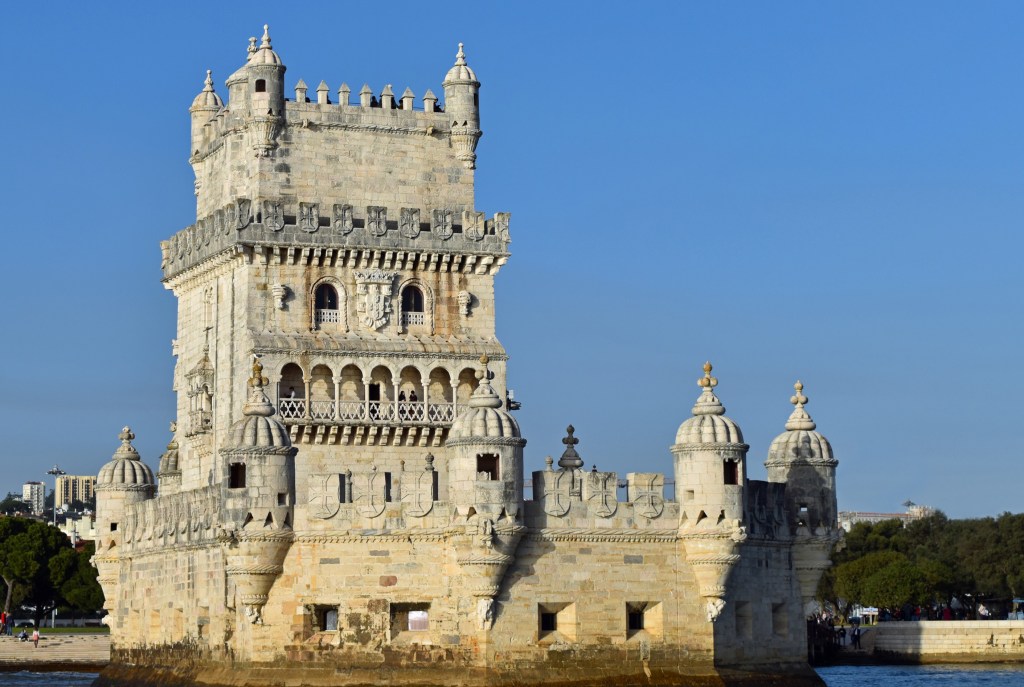
With its prominent location on the north bank of the Tagus River, the Tower of Belém was originally built as a military fortification by order of King D. Manuel. Designed by architect Francisco de Arruda and constructed between 1514 and 1519, the tower stands 98 feet (30 meters) tall. The intricately carved limestone features both maritime and religious motifs including twisted rope and the Cross of the Order of Christ. Portuguese Manueline in style, both Italian and North African influences are also apparent. Over time, the tower lost its role as a defense system and its ammunition depots were turned into dungeons to house political prisoners. The four-story tower contains a chapel, audience room, Kings room, and Governors room. Admission is €6.00 for adults with discounts for seniors and families.
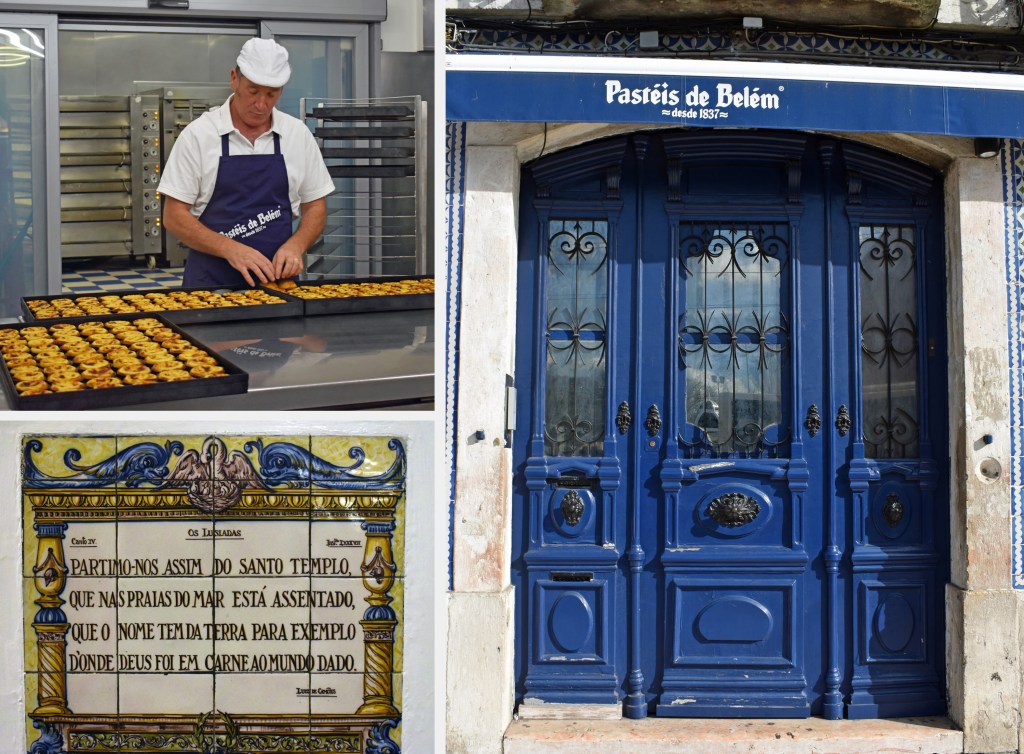
Founded in 1837, Pastéis de Belém began in a small general store attached to a sugar cane refinery. Three years earlier, all convents and monasteries in Portugal were shut down and the clergy and workers were expelled. In order to survive, someone from the monastery offered egg custard tarts for sale in the store which quickly became known as Pastéis de Belém. These sweet confections are made from an ancient secret recipe of the monastery and the recipe has remained unchanged to this day. Tip: The long line of people at the entrance are waiting for takeaway service. Go past the line towards Jerónimos Monastery and you’ll find an entrance to the restaurant. There are multiple dining rooms and a lovely patio where you can order drinks, sandwiches, and pastries. Your server can bring you boxes of pastéis to go!
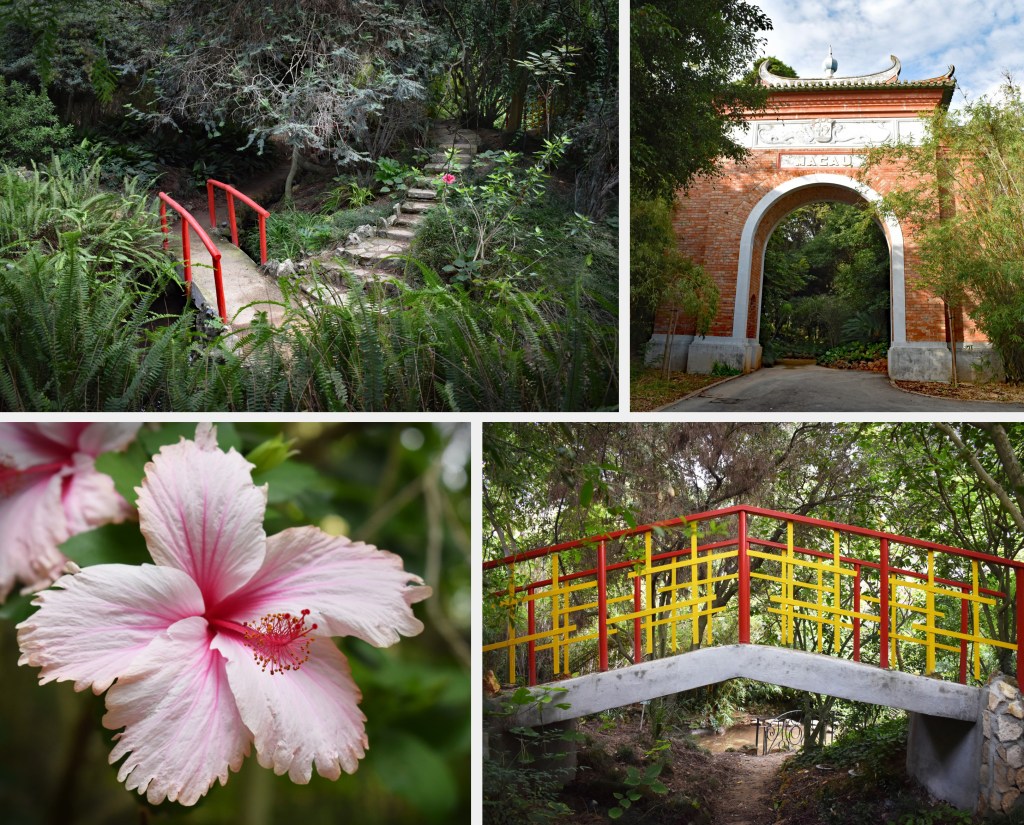
One of my favorite spots in Belém is the Tropical Botanical Garden (Jardim Botânico Tropical.) At 12.4 acres (5 hectares), the garden is an oasis of tranquility in bustling Lisbon. The garden and its greenhouses contain around 600 plant species from various continents, mostly from tropical or subtropical regions. Featured species include Guadalupe Palm, Ginkgo, Elephants Foot Tree, Bunya Pine, Sequoia, and a Dragon Tree. A highlight of our visit was a stroll through the lovely Oriental Garden with its meandering stream and arched bridges. At its entrance is a large brick archway modeled after the portico of the A-Ma temple in Macao, China. The garden contains exotic species including Hibiscus, Bamboo, Oregon Grape (Leatherleaf Mahonia), Japanese Laurel (Aucuba Japonica), and Heart-Leaved Bergenia (Bergenia Crassifolia).
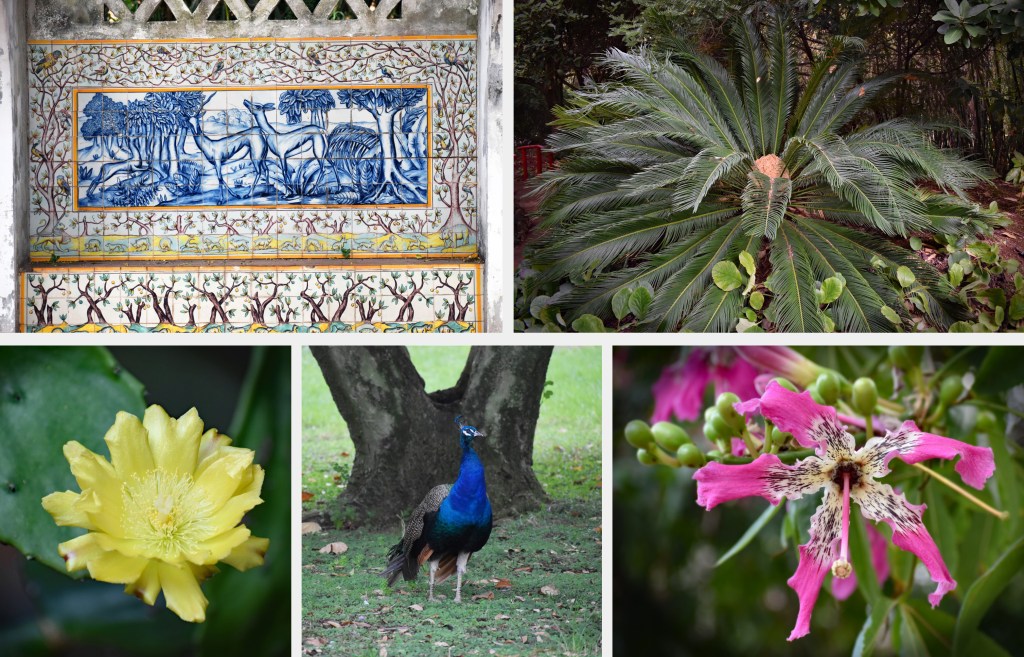
Classified as a National Monument, the Tropical Botanical Garden is located on land once occupied by the farms and recreational homes of Portuguese nobility during the 16th to the 18th century. Although most of the structures from that time are gone, one notable exception, the Palace of the Counts of Calheta, stands at the north end of the garden. Marble statues from the 1600’s and the 1700’s can also be seen throughout the garden. The Directors House, built for the 1940 Portuguese World Exhibition, features intricately painted tiles depicting Asian and African themes along its exterior walls. Admission to the garden is €4.00 for adults with discounts for seniors and families.

Fancy visiting a museum, then Belém is a great choice. Several are within a short walk from Belém Tower including the National Coach Museum, the Museum of Art, Architecture, and Technology (MAAT), the Navy Museum, and the Museu Coleção Berardo.
Join me for my next post, a pictorial celebration of Spring!


 Travels with Terri
Leave a reply to Terri Cancel reply