
With awe-inspiring scenery around every bend, it’s no wonder why a trip on the Jacobite Steam Train has been described as the greatest railway journey in the world. Filmmakers love the Scottish Highlands as well and films including Local Hero, Highlander, and the Harry Potter series were shot there. We began our train trip in Fort William, the largest town in the West Highlands and gateway to the highest point in Britain, Ben Nevis. At 4,413 feet (1,345 meters) it dominates the landscape and is popular with hikers and rock climbers. Usually shrouded in clouds, we got lucky and were able to see the summit several times during our stay in Fort William.
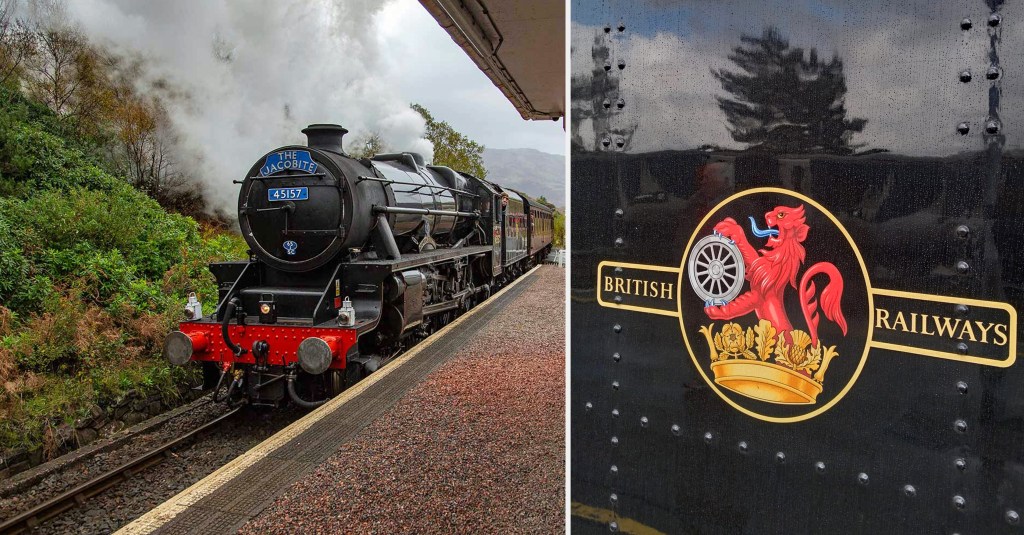
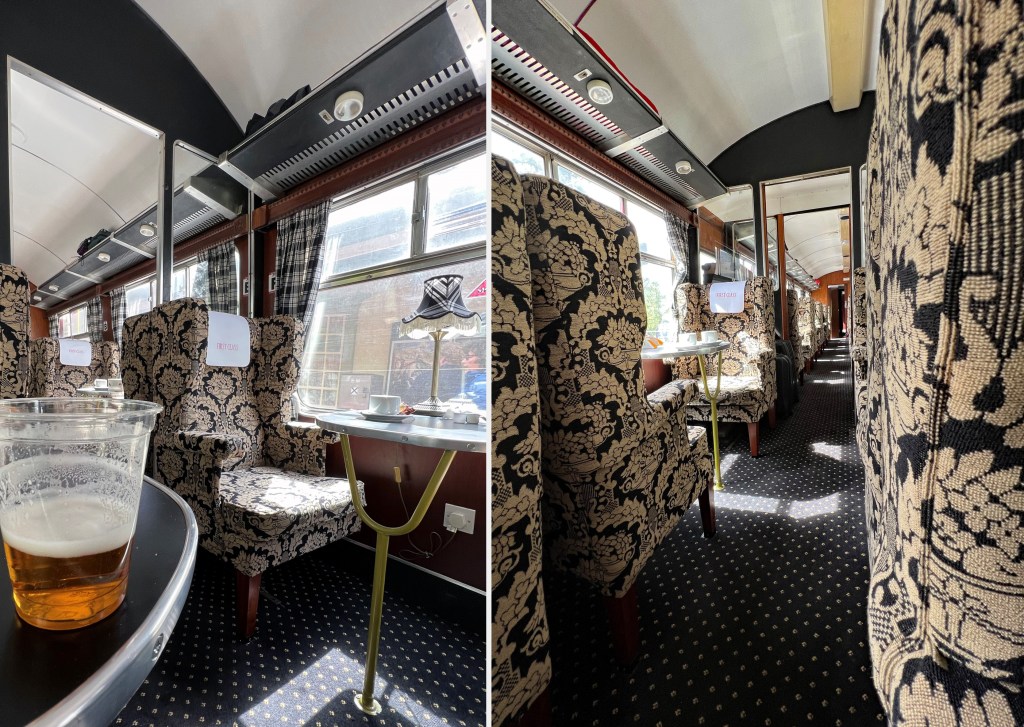
Harry Potter fans will instantly recognize the Jacobite Steam Train as the Hogwarts Express. The train journeys between Fort William and Mallaig, an 84-mile (135 kilometers) round trip voyage and crosses over the famous Glenfinnan Viaduct in each direction. The engine for our trip, number 45212, was built by Armstrong Whitworth at Newcastle upon Tyne in 1935 and is one of the 18 remaining members of the original 842 Black 5’s. Designed by William Stanier, these engines were painted in black and had a power rating of 5, hence the nickname Black 5’s. We booked seats in one of the first-class carriages, which has tables for four on one side and tables for two on the other side. All the coaches are former British Railways Mark 1s from the 1960’s. In addition to the open first- and second-class carriages, there are compartments, and these were used in the filming of the Harry Potter series.
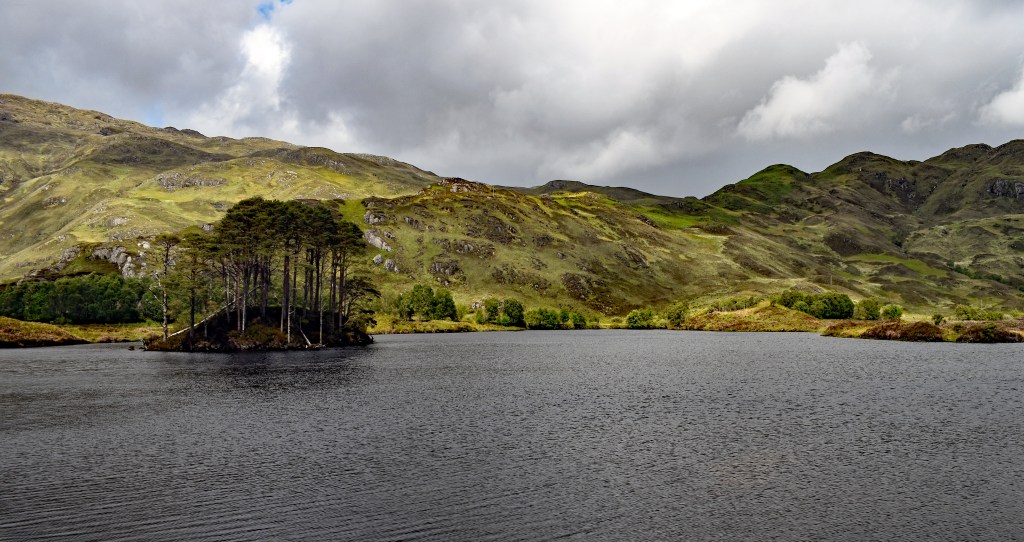
Shortly after leaving the station, the train slowed so passengers could take photos of Neptune’s Staircase, a series of eight locks on the Caledonian Canal. It is the longest staircase lock in Scotland and was built by Thomas Telford between 1803 and 1822. Continuing our journey at a faster pace, we were treated to gorgeous scenery on both sides of the train. A small island in the middle of a loch caught my eye and I later learned its significance in the Harry Potter films. Turns out it was the setting for the burial spot of the wizard Albus Dumbledore in Harry Potter and the Half-Blood Prince. Called Eilean Na Moine in the film, the tiny island is located on Loch Eilt. It was digitally imposed on the larger Loch Arkaig for the film.
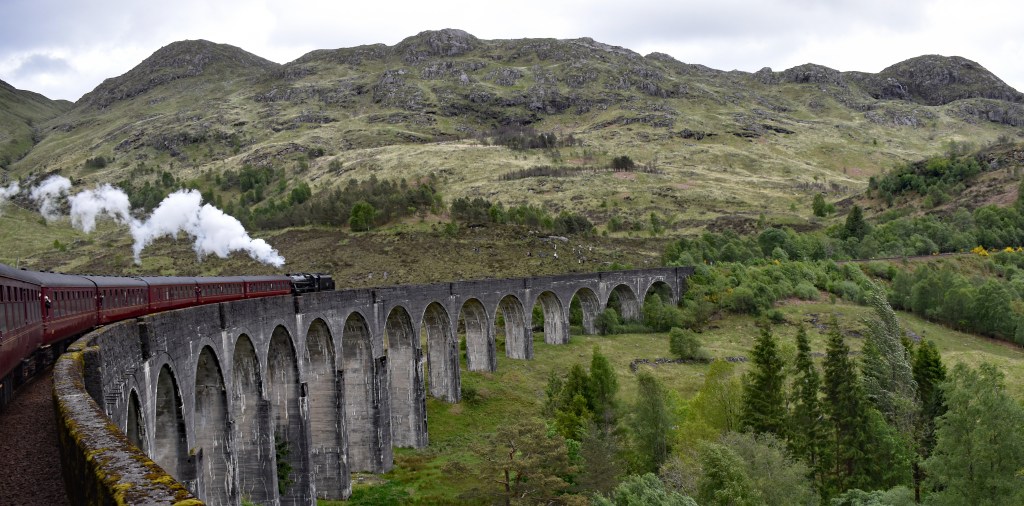
Another thrill for Harry Potter fans is crossing the 21-arched Glenfinnan Viaduct. At 1,247 feet (380 meters) long, it is the longest concrete railway bridge in Scotland. Located at the head of Loch Shiel, it crosses the River Finnan with a view of the Glenfinnan Monument in the valley below. The 98 feet (30 meter) tall bridge was designed by Simpson and Wilson and built between 1898 and 1901. They hired engineer Robert McAlpine for the massive project. McAlpine was nicknamed “Concrete Bob” due to his innovative use of mass concrete. The single-track line has a curve of 792 feet (241 meters) and offers stunning views of the train as it crosses over the bridge. Note: The best views by far are from the first-class carriages where you can see the other carriages as they cross the viaduct.
As the train continued towards Mallaig, we passed by Loch Morar. With a maximum depth of 1,017 feet (310 meters) it is the deepest freshwater loch in the British Isles. It also is the fifth largest loch in Scotland with a surface area of 10.3 square miles (26.7 square kilometers) and was formed by glaciers about 10,000 years ago. Next, we passed over one the shortest rivers in Scotland, River Morar, which is only .62 miles (1 kilometer) in length at high tide. The Morar Railway Viaduct dates to 1901 and was also built by “Concrete Bob.” Near the village of Morar, we passed several exquisite beaches that were used in filming both Local Hero and Highlander.
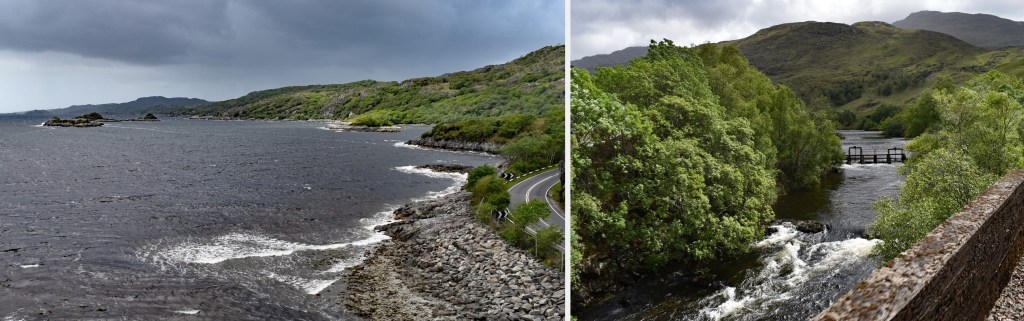
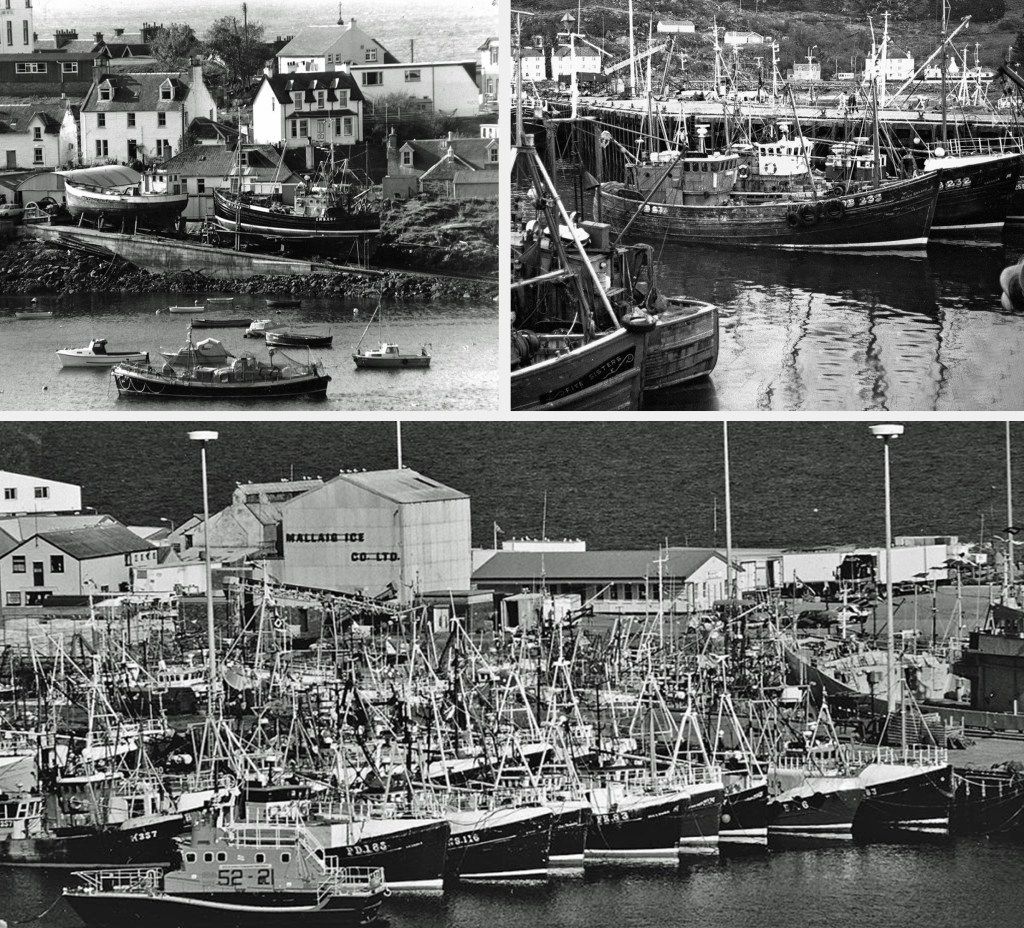
The railway line ends in Mallaig, a busy fishing port and ferry terminal. Situated between the North Atlantic and Loch Nevis, Mallaig has been used as a harbor since the Vikings arrived in their longships. In the 1840’s the owner of the North Morar Estate, Lord Lovat, divided the farm of Mallaigvaig into parcels and encouraged his tenants to establish a fishing village. He also built the first pier in the harbor and by 1851, Mallaig had become the largest settlement in the district.
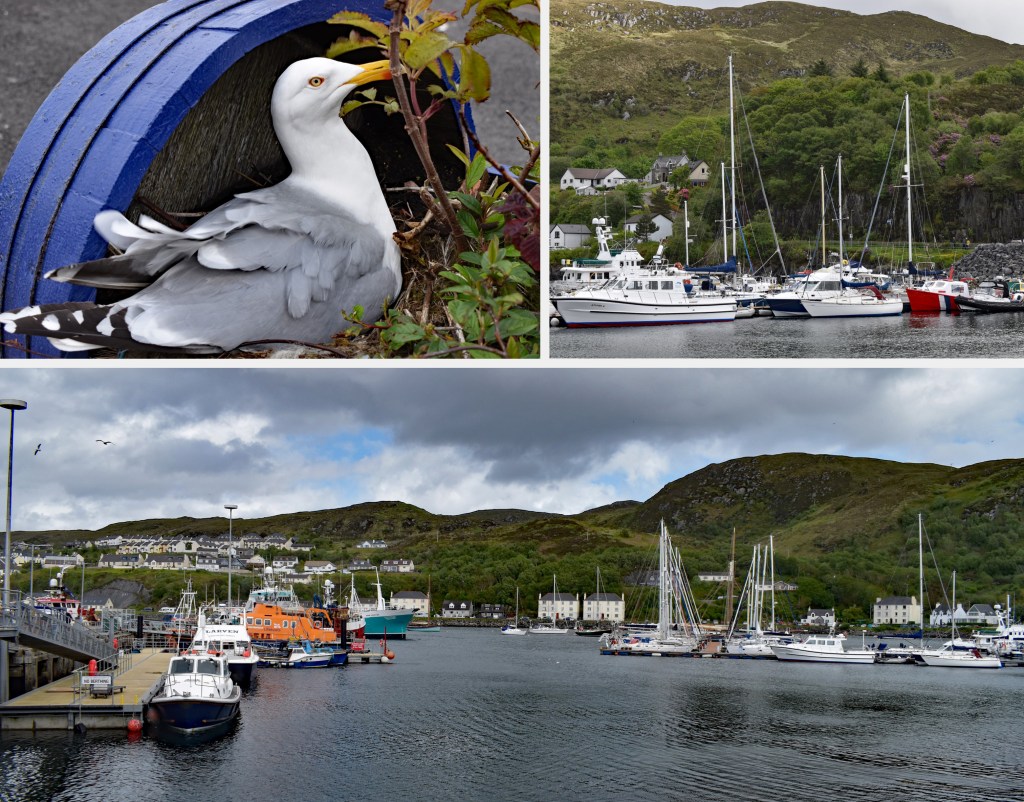
I found Mallaig to be quite charming and we really enjoyed our short time there. After a yummy bowl of Cullen Skink with warm bread and butter at one of the many restaurants, we looked around the gift shops and art galleries. Mallaig has much to offer tourists including a Heritage Center, boat tours, hotels, B&B’s, and ferry services to Skye and to the Small Isles. We took a lovely stroll around the harbor before heading back to the train for our return trip to Fort William.
In my next post, I’ll journey back to the Middle Ages for a festival in Obidos, Portugal. Stay tuned!


 Travels with Terri
Leave a comment