
Europe has an amazing rail system with direct routes, high-speed trains, several seating classes, and various food options. Our train from Prague to Berlin (EC 174) is operated by the Czech Rail System and has a restaurant carriage, Wi-Fi, and charging sockets. During the four and a half hour trip from Prague to Berlin, we took in the gorgeous scenery while enjoying some drinks and snacks. Truly a wonderful way to travel!
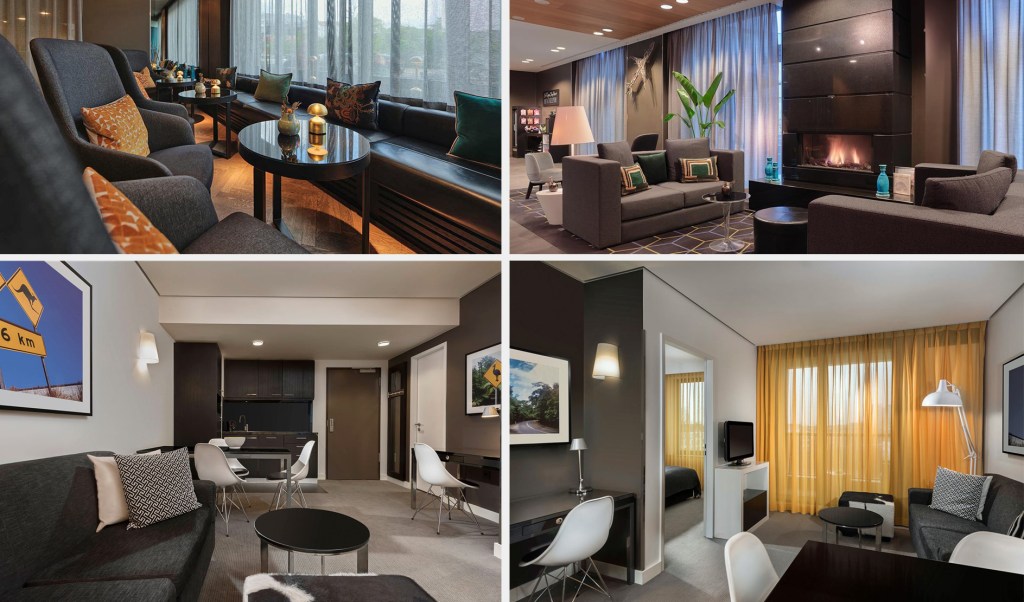
Our home for the next three nights was the lovely Adina Apartment Hotel near Hackescher Markt. Our one-bedroom apartment included a well-equipped kitchen, work desk, washing machine and dryer, two televisions, and a king-sized bed. From the entrance we had a wonderful view of the Berlin TV Tower and there are numerous bars, cafes, shops, and restaurants within a short walk. After an early dinner at a Vietnamese restaurant across from our hotel, we set off to buy some groceries. One of the many advantages of booking an apartment is being able to prepare simple meals and snacks. Our staples include coffee, milk, cereal, fruit, cheese, beer, and wine. We found a massive two-level supermarket, larger than any we’ve seen since moving to Europe. In Portugal, France, and Spain, stores have a limited selection of local and imported beers but numerous aisles of wine. It’s the opposite in this store with aisle after aisle of beer and only one of wine. A beer drinkers paradise!
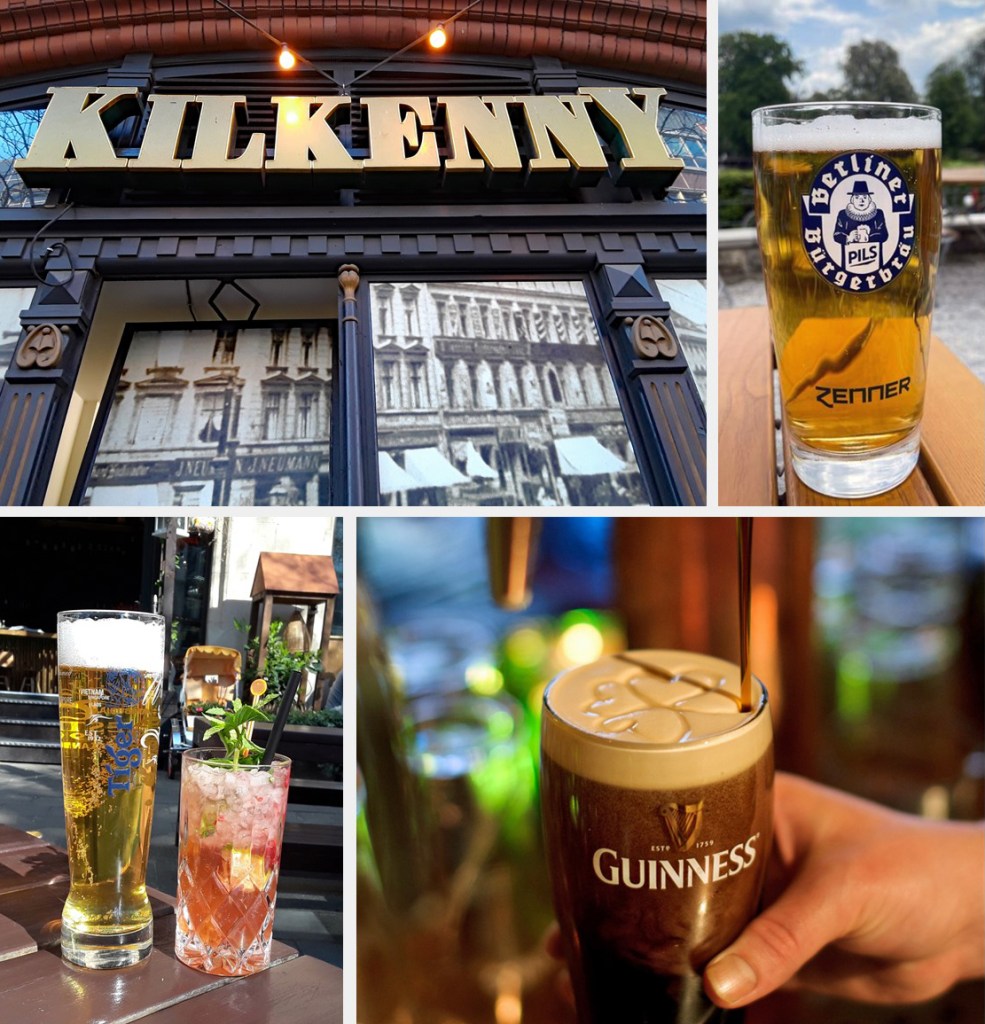
It’s no secret that Germans love their beer. Ranked seventh in the world for beer consumption (per capita), they drink an average of 24 gallons (91 liters) per year. The oldest still operating brewery in the world Weihenstephan, is located near Munich and began production in 1040. By far the most popular type of beer is pilsner, known as ‘Pils.’ Named after the Czech town of Pilsen, it’s a light-golden beer that goes well with German favorites like bratwurst, schnitzel, and sauerbraten. With over 1,500 breweries which produce 5,000 various types of beer, you are sure to find something to suit your palate.
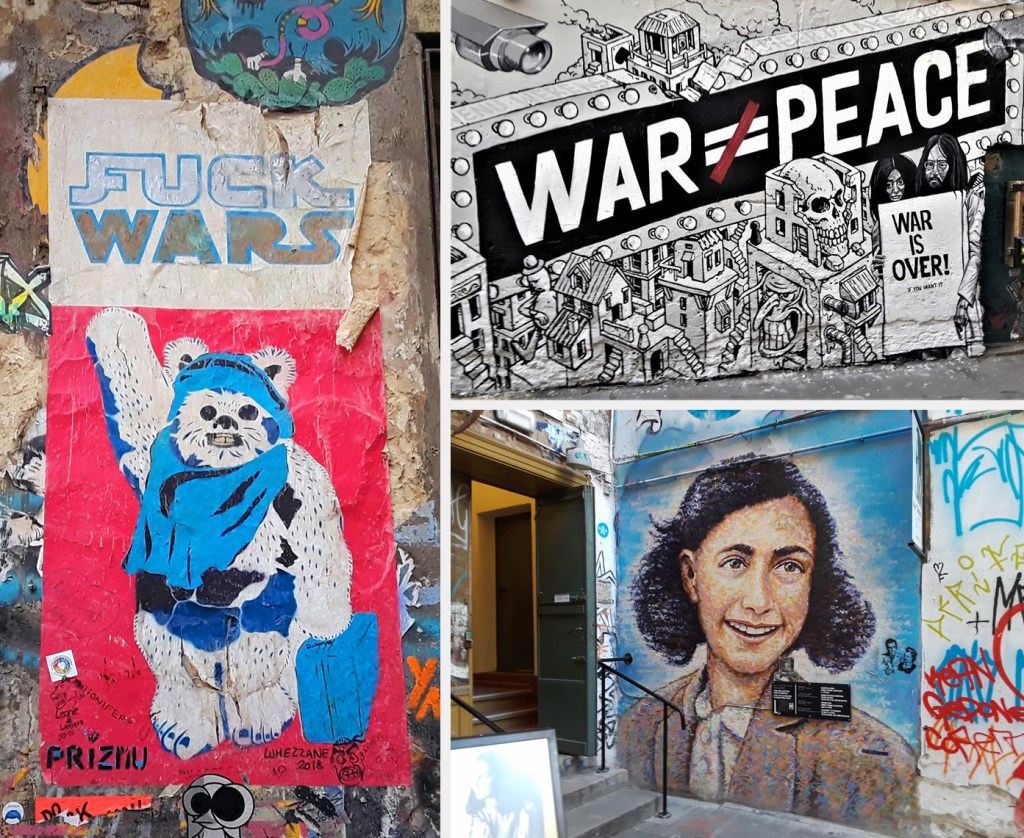
The Hackesche Höfe is a labyrinth of eight courtyards, accessible through a main arched entrance. A popular destination for both Berliners and tourists, it offers numerous boutiques, cafes, bars, and restaurants. Rick and I discovered it by accident while exploring the neighborhood near our hotel. The Hackescher Markt was another great find with its trendy shops, art studios, and numerous dining choices. Once a marshland, the area was demolished and transformed into a town square in the mid-18th century by the order of Frederick the Great. It was officially named after its builder, city commander Count von Hacke, in 1840. Today, it hosts an open-air market on Thursdays and Saturdays offering locally produced foods, clothing, souvenirs, and designer pieces.

When we told our neighbors in Obidos that we were going to Berlin, they arranged a tour of the city for us with their friend who lives there. Michael picked us up from our hotel and we headed off to see the sights. Since it was a lovely Easter Sunday, traffic was heavy, and parking was sparse near the major tourist attractions. We did drive past the Brandenburg Gate, Checkpoint Charlie, the Reichstag Building, and the Berliner Dom before going to the German Chancellery (Bundeskanzleramt) on the River Spree. As we drove, I noticed that most of the buildings are modern in design. Michael told us that Berlin was heavily damaged during WW II and had to be re-built after the war. About 6 square miles (16 square kilometers) of the city was reduced to rubble after hundreds of air raids between 1940 and 1945.

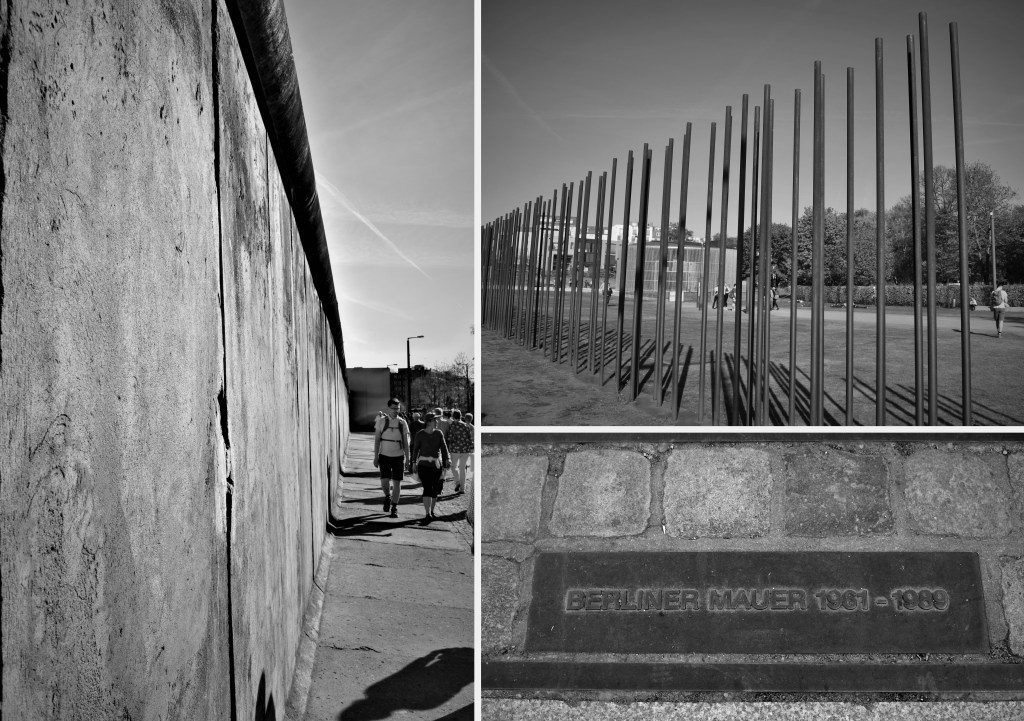
Next, Michael took us to the neighborhood where he grew up so we could visit The Berlin Wall Memorial. Located on Bernauer Strasse, this 1.4km (0.87 mile) section of road contains some of the remaining pieces of the Berlin Wall. He shared vivid memories about its construction and the impact it had on those living on either side. Erected in August of 1961, its primary intention was to keep East German citizens from escaping to the West. In addition to the concrete wall, were guard towers and a wide swath of land known as the “death strip” that contained anti-vehicle trenches and sharp objects such as nails and barbed wire. During the 28 years the Berlin Wall stood, an estimated 140 people lost their lives due to escape attempts, suicide, and accidents. At least 251 travelers also died during or after passing through one of the Berlin border checkpoints.
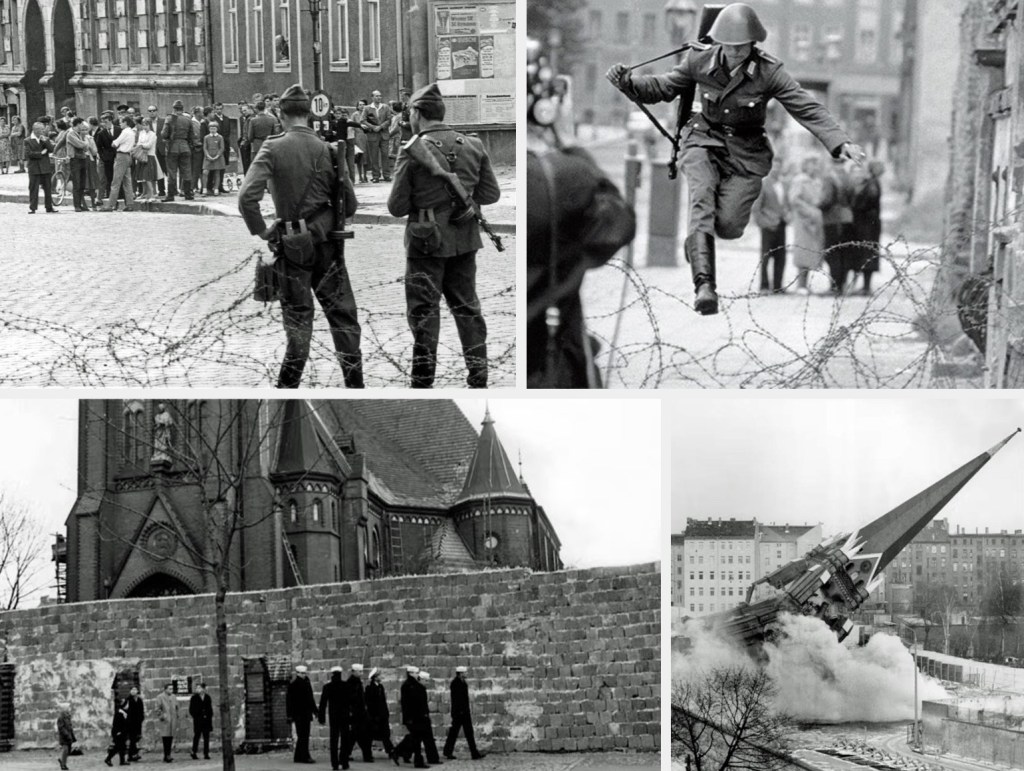
Bottom Row: In 1961, the Church of Reconciliation (Versöhnungskirche) was situated on the front line of the Cold War (Photo courtesy of United Archives), Demolition of the Church in 1985 (Photo by Roland Holschneider)
We learned that when barriers were erected along Bernauer Strasse, frightened residents on the East side of the street fled their homes. Many were injured and some died trying to reach the safety of the West. After this section of the Wall was completed, over 2,000 people were forced to relocate, and the Church of Reconciliation (Versöhnungskirche) was left abandoned in the death strip. East Germany demolished the building in 1985 and in 2000 the Chapel of Reconciliation was built in its place. While our visit to the Memorial was very informative, it left me with feelings of both deep sadness and anger. I will never understand how humans can be so cruel to each other simply due to differing beliefs. We finished our day with Michael at Zenner Beer Garden where we sampled their house beers and enjoyed delicious sausages, rolls, and potato salad. Located along the River Spree in the lovely Treptower Park, it is a perfect place to spend Easter in Berlin.
Join me for my next blog where we visit the colorful city of Cologne!
Cover Image: German Chancellery (Bundeskanzleramt) on the River Spree, Berlin TV Tower (the tallest building in Germany)

 Travels with Terri
Leave a reply to Martine Cancel reply